June 8, 2026 Edited June 8, 2026
Summer is the perfect time to do fun and educational activities without the pressure of formal lessons! Kids can take time to explore things they enjoy and absorb learning through a wide range of summer activities.
Below are some summer activities that double as learning opportunities, organized by theme so you can choose what best fits your family’s preferences.
Nature & Outdoor Learning
- Go On Nature Walks: Kids have so much fun exploring outdoors! Let them observe plants, identify insects, and track birds while keeping a nature journal. They can draw pictures or write about their findings.
- Plant a Garden: Learning how to plant a garden and care for it (including weeding) helps kids learn about basic ecology, life cycles, and responsibilities. Even if you just plant a small garden with one or two vegetables or grow a flower garden, this is a great learning experience.
- Learn Astronomy: Learn summer constellations and draw them in a journal. Or observe and record the moon each night for a month.
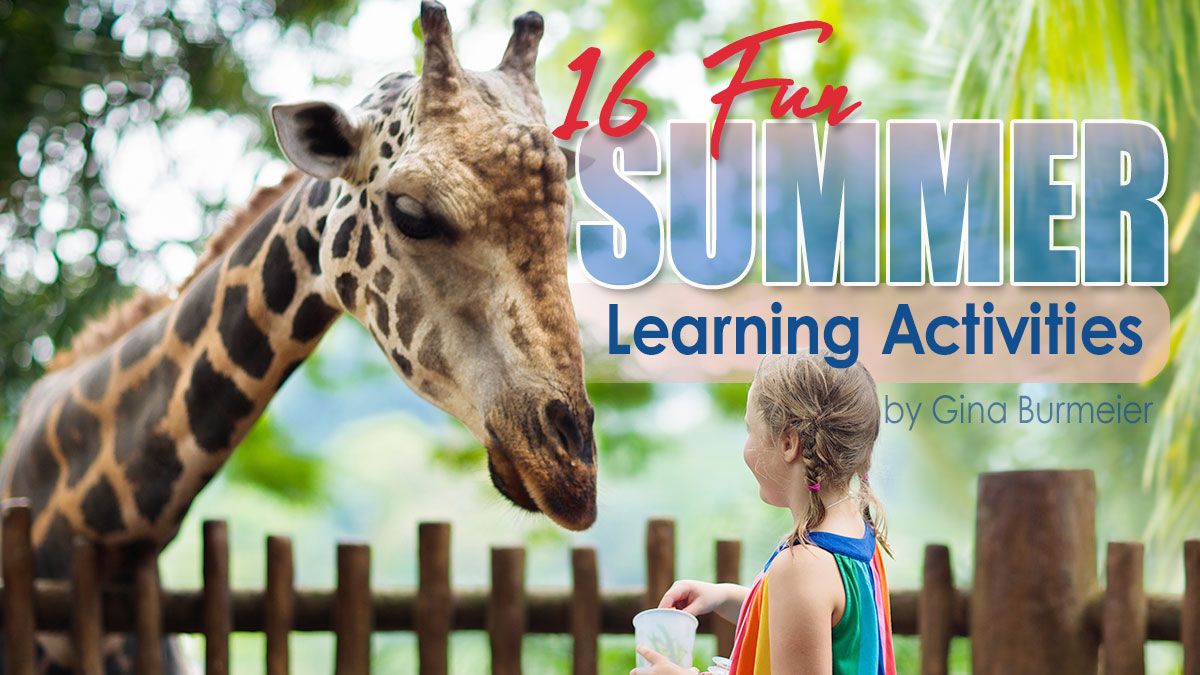
- Visit a Zoo: Kids connect with wildlife firsthand and learn about all types of animals in a zoo!
Reading, Writing & Storytelling
- Do Summer Reading: Join a library club for summer reading and let your kids choose their own books, set goals, and earn rewards. When reading becomes part of summer fun, it feels less like schoolwork and more like a natural part of life.
- Enjoy Family Read-Alouds: Read together and have a party at the end celebrating the theme of the book. You can also be creative by cooking a food mentioned in the story, dressing up as the characters, playing a themed game, or watching a movie adaptation if there is one available.
- Practice Creative Writing: Encourage kids to write comics, short stories, or scripts for homemade plays. Plotting a story, solving character problems, and making decisions about structure all build analytical skills.
Arts, Crafts & Creativity
- Do Art Through Nature: Use leaves, stones, and flowers to create mosaics or rubbings. Arrange petals, leaves, and stones in circular patterns to explore symmetry and design.
- Create DIY Craft Stations: Set up a table with supplies for painting, weaving, or sculpting. You could also create a station with items like cardboard tubes, yarn, buttons, fabric scraps, and recycled materials to spark creativity.
- Explore Photography: Teach composition, lighting, and storytelling through images. Photography helps kids learn to slow down, notice details, and see beauty in everyday moments.
Life Skills & Practical Learning
- Cook Together: Measuring ingredients, doubling recipes, and timing steps all reinforce fractions, sequencing, and problem solving. Kids are also more likely to try new foods when they help prepare them, and they learn what goes into a balanced meal.
- Budget & Learn Money Skills: Let kids plan a picnic or small outing with a set budget. Have kids list what they want for the picnic, then decide what fits the budget and what needs adjusting. One child can be the “price checker,” another the “calculator,” another the “receipt keeper.”
- Learn Outdoor Survival Basics: Develop practical outdoor skills together—from knot-tying and map reading to pitching a tent and enjoying hikes or fishing trips.
History
- Visit a Museum and Explore Hands-On Exhibits: Seeing real artifacts, artwork, fossils, and historical objects makes concepts more vivid and memorable than reading about them alone.
- Visit a Living History Farm: This adventure gives kids a hands-on experience into what life was like years ago. Kids can do chores like churning butter, grinding grain, washing clothes, gardening, or helping with simple farm tasks. There are often also demonstrations of old-fashioned skills like blacksmithing, woodworking, spinning, weaving, candle-making, or cooking over an open hearth.
- Go to a Reenactment: Instead of imagining events from a book, you see them unfold through live demonstrations, battles, and daily life scenes. Many reenactments also let visitors try tools, crafts, games, or skills from the time period.
Enjoy the summer as you take time to do fun projects together without using textbooks or formal lessons. Kids love family time and hands-on activities, and they naturally learn through these real-world experiences.