
Are You New to Homeschooling?
Welcome to Rainbow Resource Center's comprehensive guide for parents who are new to homeschooling. Whether you're considering homeschooling for the first time due to educational preferences, family needs, or other reasons, we're here to help you navigate the process.
As a trusted provider of homeschool curriculum and resources for nearly 40 years, Rainbow Resource Center offers thousands of affordable, high-quality materials to support your family's learning journey. We also have a helpful Consulting team of homeschool moms and educators who are here to help you with all of your homeschooling questions—entirely for free. Give them a call or send them a message to get curriculum advice and answers to homeschooling questions from people who care!
This guide will cover everything that you'll need to get started homeschooling confidently.
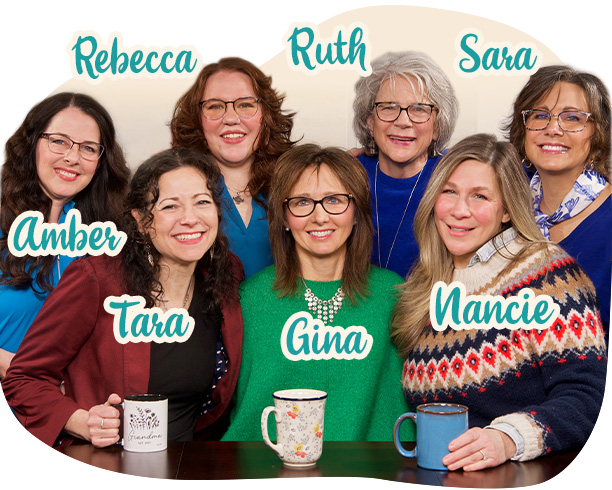
3 Ways to Get Help
- Live Chat during regular business hours, Monday - Friday, 8:30am-5pm CT
- Call to talk to our consultants during business hours at (888) 841-3456
- Email consultants@rainbowresource.com and we'll respond to your questions!
What is Homeschooling?
Homeschooling is a flexible learning option where parents or guardians take primary responsibility for the direction of their child's education. Learning can be directed at home, through a charter or micro-school, local Cooperatives, or a combination of all the above. It's legal in all 50 U.S. states and allows for customized learning tailored to your child's needs, pace, and interests. Homeschooling can incorporate various styles, such as structured curricula, child-led learning, or hybrid models combining online resources with hands-on activities.
In 2026, homeschooling continues to grow in popularity, as families choose this path for its flexibility and focus on individualized education. It's not just about academics—homeschooling helps create lasting family bonds, develop life skills, and strengthen core values.
Benefits of Homeschooling
Homeschooling offers numerous advantages over traditional schooling that can make it a rewarding choice for families:
- Personalized Learning: You may tailor lessons to your child's strengths, weaknesses, and learning style (e.g., visual, auditory, or kinesthetic).
- Flexible Schedule: Adjust for family travel, health needs, or extracurriculars without rigid school calendars.
- Stronger Family Relationships: More quality time together facilitates building deeper connections.
- Safe Learning Environment: Homeschooling may help children avoid issues like bullying or peer pressure in a controlled home setting.
- Academic Excellence: Many homeschooled students excel in standardized tests and college admissions due to focused and personalized instruction.
- Customization for Special Needs: Homeschooling can often better accommodate gifted learners as well as those with ADHD, dyslexia, or other needs. For support and community, Rainbow Resource Center partners with the organization SPED Homeschooling.
- Incorporation of Values: Faith, ethics, or cultural elements can all be integrated seamlessly within a home education setting.
Of course, homeschooling requires commitment, but the rewards often outweigh the challenges for dedicated families.
Getting Started: A Step-by-Step Guide
Step 1: Research Your State's Homeschool Laws
Before jumping ahead, it's essential to understand the homeschooling laws where you live. Homeschooling is legal everywhere in the U.S., but requirements vary by state. States fall into four regulation categories based on Home School Legal Defense Association (HSLDA) data from 2026:
|
Regulation Level |
Description |
States |
|
No Notice, Low Regulation |
No notification required; minimal oversight. |
Alaska, Connecticut, Idaho, Illinois, Indiana, Iowa, Michigan, Missouri, New Jersey, Oklahoma, Texas, Wyoming |
|
Low Regulation |
Requires basic notification to the local school district. |
Alabama, Arizona, Arkansas, California, Colorado, Delaware, Florida, Georgia, Kansas, Kentucky, Louisiana, Maryland, Mississippi, Montana, Nebraska, Nevada, New Mexico, Ohio, South Dakota, Tennessee, Utah, Wisconsin |
|
Moderate Regulation |
Notification plus test scores or professional evaluations. |
Hawaii, Maine, Minnesota, New Hampshire, North Carolina, North Dakota, Oregon, South Carolina, Vermont, Virginia, Washington, West Virginia |
|
High Regulation |
Notification, evaluations, curriculum approval, or home visits. |
Massachusetts, New York, Pennsylvania, Rhode Island |
Source: Home School Legal Defense Association (HSLDA). "Homeschool Laws in Your State." Accessed June 2, 2026. https://hslda.org/legal. Categorizations based on HSLDA's interactive map (as of access date). Laws vary and may change—always verify your state's specific requirements directly via the map.
Key requirements to check:
- Compulsory Attendance Ages: Typically 6-18, but varies (e.g., 5-17 in some states).
- Notification: In most states, file a notice of intent to withdraw with your local school district or state education department. This might include an affidavit or letter.
- Required Subjects: Common ones include reading, writing, math, science, history, civics, and health. Some states specify hours (e.g., 900-1,000 per year).
- Assessments: Moderate/high regulation states may require annual standardized tests or portfolio reviews by a certified teacher.
- Record-Keeping: Maintain attendance logs, progress reports, and immunization records (if required).
- High School/Graduation: For teens, track credits for diplomas; some states issue state-recognized diplomas or use umbrella schools.
Action Item: Visit the Home School Legal Defense Association (HSLDA) for your state's specifics. If you're military or nomadic, follow the laws of the state where you're physically present.
Step 2: Withdraw from Public or Private School (If Applicable)
Requirements vary by state. The best resource is once again the HSLDA. Select your state and look for the "How to Withdraw" section for complete information.
Draft and send a withdrawal letter
- Keep it simple, polite, and factual. Do not include details about your homeschool plans, curriculum, or reasons for withdrawing unless required by your state (most do not require this).
- Send via certified mail with return receipt requested (or hand-deliver with a stamped copy) for proof of delivery. This creates a paper trail.
- If withdrawing mid-year, send the withdrawal notice as soon as you decide to homeschool.
- If starting over summer for the next school year, send the withdrawal notice before the new year begins to avoid automatic re-enrollment.
Request records
- In your letter (or a separate request), ask for your child's official transcripts, report cards, immunization records, and any other academic files.
- Schools are generally required to provide these promptly. Keep copies for your homeschool portfolio.
Timing considerations
- Mid-year withdrawal: Effective immediately upon receipt.
- End-of-year: Withdraw before the next year starts if your child is pre-registered.
Note: In some states, withdrawal automatically starts your homeschool notification process.
Step 3: Choose a Homeschooling Curriculum
You've familiarized yourself with your state's requirements. Now's the time to think about curriculum! When selecting curriculum essentials, prioritize a balanced foundation that covers the core subjects most states require or recommend: language arts (phonics and reading, writing and composition, vocabulary grammar usage and mechanics, spelling, and literature), mathematics (from basic operations to advanced concepts), science (life, earth, physical, and biology/chemistry), and history/social studies (chronological history, geography, civics, and cultural studies). Health, physical education, art, and music are valuable additions that round out a well-rounded education. Tailor depth and emphasis to your child's developmental stage:
- Preschool/Kindergarten (Ages 4-6): Focus on read-alouds and basic pre-reading skills, counting and simple patterns through games, sensory exploration, social-emotional development, and lots of free play to spark curiosity.
- Elementary (Ages 6-11): Build strong foundations with systematic phonics and fluent reading, creative and expository writing, mastery of arithmetic facts and problem-solving, introductory science through observation and simple experiments, and broad historical narratives or community studies.
- Middle School (Ages 11-14): Deepen skills with formal grammar and composition and literary analysis, upper-level arithmetic pre-algebra through early algebra and geometry, lab-based life or earth sciences, logic and critical thinking, and more detailed world or American history with primary sources.
- High School (Ages 14-18): Prepare for adulthood with advanced literature analysis, higher mathematics (algebra II, trigonometry, pre-calculus, or calculus), rigorous lab sciences (biology, chemistry, physics), in-depth history/government/economics, foreign languages, and electives that align with interests or career goals while carefully tracking credits for transcripts and diplomas. It can feel like there is more at stake with homeschooling High School students. Thanks to consultant Gina, you can feel empowered and equipped to Navigate the High School Journey. Through the help of all our Consultant Team, calculating and applying Electives for High School is easier than it seems.
Tips: Start simple! Don't overbuy in your first year. When selecting curriculum, it can help to start with language arts and options. Use placement tests if available. Read reviews from other homeschoolers, and take advantage of Rainbow Resource Center's extensive selection of affordable curricula, grade-level bundles, and subject-specific kits to find what works best for your family.
For extra guidance, consider Choosing Curriculum the FAMILY Way—our helpful framework that outlines six key factors to ensure the curriculum meets the needs of the student, teacher (you!), and your whole family for the best fit possible. Our free consultants are always happy to walk you through it!
Dive deeper into choosing homeschool curriculum
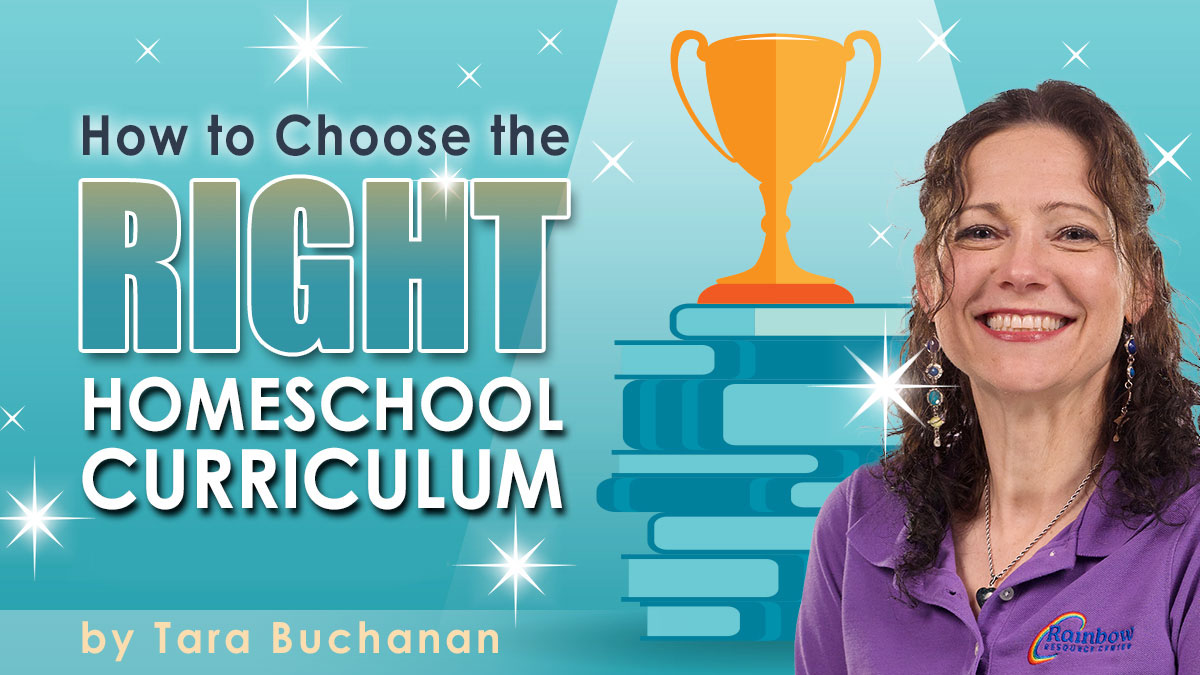
Watch the FAMILY Way video
Homeschool Starter Packages
Many new homeschooling families start with all-in-one boxed curricula for simplicity, then branch into subject-specific resources as confidence grows. This is why we offer Rainbow Starter Packages, available in 3 different options:
- Rainbow Starter Packages with Christian Content: These are complete, grade-level curriculum packages that include all necessary teacher and student materials for the four core subjects: Math, Language Arts/ELA, Science, and Social Studies/History. They incorporate Christian or faith-based content in some (but not necessarily all) resources, offering academically strong, user-friendly options from various publishers. Packages support different teaching styles and are designed to provide everything needed to start homeschooling right away. View our Starter Packages with Christian Content here.
- Rainbow Economy Starter Packages with Christian Content: These budget-friendly versions deliver easy-to-use, academically solid curriculum at a lower cost while still including Christian content in selections. They cover the core subjects with all required teacher/student materials for one student. The focus is on affordability and value without sacrificing quality or ease of use. View our Economy Starter Packages with Christian Content here.
- Secular Packages (No Religious Content): These complete grade-level packages provide a strong, religion-free homeschool curriculum for the core subjects (Math, ELA, Science, and Social Studies/History). They emphasize academically robust materials from secular publishers. Ideal for families seeking neutral or secular options, they include all necessary teacher and student resources to get started effectively. View our Secular Packages here.
Step 4: Set Up Your Learning Environment
Creating a dedicated and inviting space for homeschooling can significantly enhance focus, productivity, and enjoyment for both you and your children. You don't need a full "classroom"—in fact, many families successfully homeschool at the kitchen table, on the couch, or even outdoors. Keep in mind each of your children might work better in a different learning environment within your home. While one child might love a traditional quiet desk setting, another might thrive lying on the couch with their feet up with background music. Paying attention to each child’s individualized needs will help them succeed.
Another helpful tip is having an organized spot for all your school supplies and books. This will ensure your homeschool day runs more smoothly.
Start simple! Your space can evolve over time. The goal is functionality and inspiration, not perfection. A well-thought-out environment reduces chaos and makes daily homeschooling smoother and more enjoyable.

Step 5: Create a Schedule and Routine
One of the greatest advantages of homeschooling is the flexibility to design a daily rhythm that aligns with your family's natural energy levels, interests, and life commitments, rather than adhering to a rigid school bell schedule.
Most families aim for 2-4 hours per day for elementary students and 4-6 for older students. It is common to tackle core subjects like math and language arts in the morning when minds are fresh, followed by science, history, or electives in the afternoon. Be sure to build in plenty of breaks for snacks, outdoor play, movement, or hands-on projects to maintain engagement and prevent burnout.
Build in routines such as starting with a morning devotional or read-aloud, including chores or life skills, and ending with free time or family activities. Experiment freely in the early weeks, observe what works best, and adjust seasonally to keep your homeschool days balanced, productive, and joyful.
Step 6: Track Progress and Adjust
Frequently Asked Questions (FAQs)
1. Is homeschooling legal?
Homeschooling is legal in all 50 U.S. states, but requirements vary widely (from no notice needed in some states to annual testing or evaluations in others). The best starting point is the Home School Legal Defense Association (HSLDA) interactive legal map. Select your state for details on notification, required subjects, record-keeping, assessments, and withdrawal from public school. HSLDA categorizes states by regulation level (no/low, moderate, high) and offers member support/forms. Always comply with your state's rules—it's straightforward once you review them!
2. What about socialization? Will my child miss out on friends?
This is one of the most common concerns, but research and experience show homeschooled kids often thrive socially with higher-quality friendships, better relationships with adults, and strong self-esteem. Socialization happens through real-life interactions: homeschool co-ops, sports teams, music/art classes, scouting, church groups, field trips, library programs, and playdates. Many families find these provide more diverse, mixed-age, and meaningful connections than traditional school settings. The key is being proactive, so consider joining local groups (check Facebook or HSLDA directories) and let your kids' interests guide activities.
3. Am I qualified to teach my child? Do I need a teaching degree?
No teaching certification is required in most states. Parents are naturally qualified as their child's primary educator. You don't need to be an expert in every subject; use curricula with guides, online videos, tutors, or co-ops for support. Millions of parents successfully homeschool without formal training.
4. Do homeschooled kids get into college?
Absolutely—they often thrive! Many colleges actively recruit homeschoolers for their self-motivation and unique perspectives. Provide transcripts (you create them), portfolios, test scores (SAT/ACT), and letters of recommendation. Homeschool graduates frequently have high acceptance rates and excel in higher education.
5. Is homeschooling expensive?
Not necessarily! It can be as affordable as you make it. Costs range from free (using libraries and online resources) to $300–800 per child annually for full curricula. Many homeschooling products can be reused between children and new products can frequently be bought at discounts. Many families actually spend less than they would on traditional school supplies and activities. Start simple and scale up!
6. How do I manage my time?
Homeschooling is typically much more efficient than traditional school, often 2–4 hours/day for elementary and 4–6 for older kids, thanks to one-on-one focus and no wasted time on transitions. Build a flexible routine (not a rigid schedule) with core subjects in the morning, then afternoons for projects, electives, or breaks. Prioritize self-care, use timers for focused blocks, involve kids in chores, and batch-prep lessons. Start small, adjust as you go, and remember flexibility is a huge benefit!
7. What curriculum should I use?
There's no one-size-fits-all. Choose based on your style (traditional, classical, Charlotte Mason, etc.) and your child's needs. Start with core subjects. Research reviews, join forums, or consult us for free at Rainbow Resource Center for options. It's okay to mix and switch if needed!
8. What if there are gaps in my child’s education?
Gaps happen in any education system and homeschooling lets you identify and fill them quickly! Assess with informal tests, portfolios, or diagnostic tools, then target weak areas (e.g., extra math practice or reading support). Use flexible curricula that allow review, or supplements like workbooks/apps. Progress is tracked through observation, not rigid benchmarks, so you can adjust as needed. Homeschooled kids often catch up fast with personalized attention, and many excel overall.
9. How will I homeschool multiple children?
Homeschooling multiple children (of different ages and levels) is common and manageable with intentional planning. Use multi-level or family-style curricula (e.g., history, science, or Bible studies together), then tailor individual subjects like math or reading. Many families rotate one-on-one time, incorporate independent work for older kids, or use short, focused sessions. Tools like unit studies or loop scheduling (cycling through subjects) help keep everyone engaged without constant separate teaching. Rainbow offers family-friendly bundles and multi-age resources. Our consultants can help match them to your crew!
10. Can I homeschool if I work outside the home?
Yes, many families do it successfully! Use self-paced online programs, co-ops for group classes, or hybrid models (e.g., mornings for work, afternoons/evenings for school). Older kids can handle more independence, and tools like audiobooks or educational videos help during busy times. It requires good planning, but the flexibility of homeschooling makes it workable.
11. What if my child has special needs or is gifted?
Homeschooling shines here with fully customized pacing, methods, and accommodations. Tailor for ADHD, dyslexia, autism, or advanced learners far easier than in traditional settings. Resources and support groups exist for specialized guidance.
12. How do I navigate life changes (new baby, illness, new job, traveling)?
Homeschooling shines during life changes because of its built-in flexibility! Scale back to core subjects during a new baby or illness. Use travel for real-world learning, such as history on road trips and science in nature. For a new job, shift to evenings/weekends or self-directed work. Pause and resume as needed! Many families "deschool" briefly to reset. Prioritize grace, routines that adapt, and community support. Life learning counts and your kids will thrive through these seasons.
13. How do I handle criticism or doubts from family/friends?
Focus on your reasons and results and share successes politely. Over time, seeing your child's growth often wins skeptics over. Connect with supportive homeschool communities for encouragement.
14. Can I call for help?
Absolutely, yes! You're not alone. Reach out to our free Rainbow Resource Center curriculum consultants (phone, email, or live chat) for personalized advice on materials. Join local homeschool groups, online forums (e.g., Facebook communities), co-ops, or conferences for peer support. HSLDA provides legal guidance (especially for members), and many states have support groups or email lists. Experienced homeschoolers love sharing tips, so don't hesitate to ask!
You're Ready to Begin Your Homeschool Adventure!
Homeschooling is a beautiful, flexible journey tailored just for your family—one that prioritizes personalized learning, strong relationships, and real-life growth over rigid routines. You've taken the first brave step by exploring this guide, researching your state's laws, considering styles, and thinking about curriculum. Remember, there's no perfect way to do it; start simple, adjust as you go, celebrate small wins, and give yourself (and your kids) grace along the way. Thousands of families thrive with this approach every year, and so can yours. We're here at Rainbow Resource Center to support you every step. Reach out to our free consultants for curriculum help, browse our affordable bundles and resources, and know you're not alone. You've got this! Welcome to the wonderful world of homeschooling in 2026!