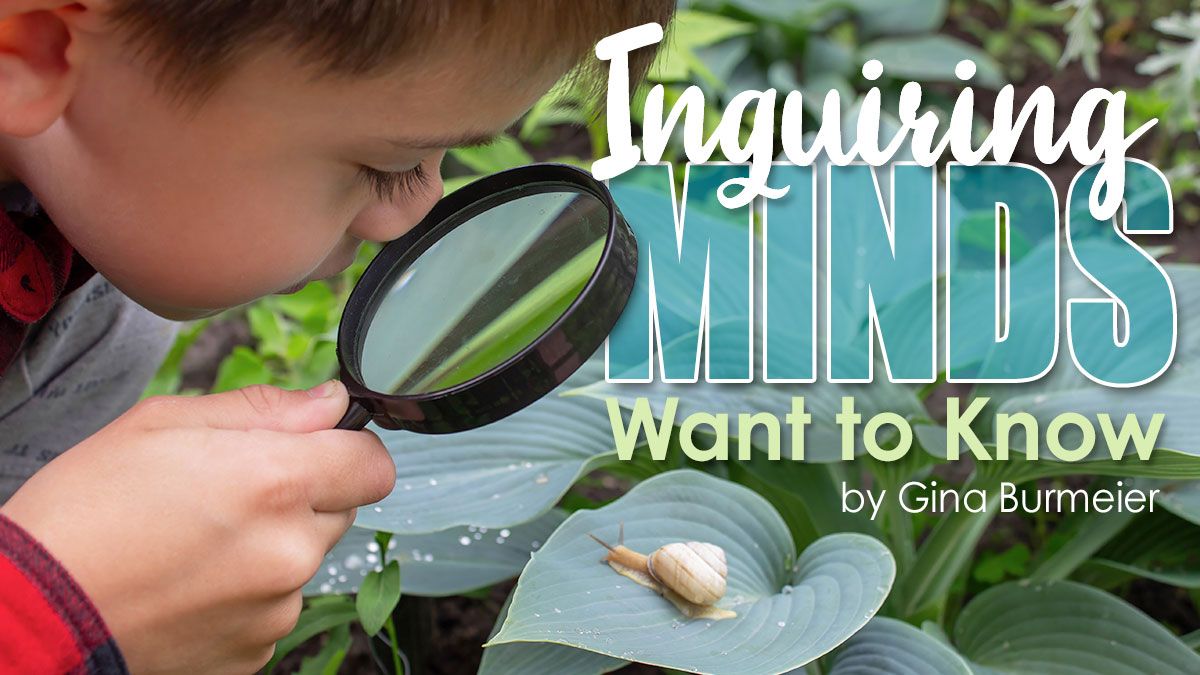
I am amazed daily by what we can learn: all the opportunities for learning and discovery available and accessible to us. This is something to intentionally instill in our children: the importance of looking for those opportunities and looking forward to learning new things. Is it just me, or does this desire wane as our students get older? As I get older, I am developing a deeper appreciation for education, specifically my own learning. I know this is something my mother and my teachers wanted for me from the very beginning and all through my years of education. It is what we hope for every student; what we pray over every child. It is also something we can, and must, model for every learner.
What Does a Model Learner Look Like?
What a learner looks like will be different for everyone. We all have our own skills, gifts, and learning styles as we come to the learning experience. Your learning could be reflected in training to better serve your students, whether it is through learning a new teaching methodology, a writing style, or a specialized integration system. In doing this, you are exemplifying to your young learners that there is importance in learning new things and growing in understanding. You can also participate in the learning process with your students. This process is intentional in the lessons of some curricula. However, your participation could also be reading that classic literature text alongside your high schooler, scratching your head through a calculus lesson, or tapping into your creative side and producing a work of art with your students. These are all low-hanging fruit, easy opportunities for you to model being a lifelong learner through simple, engaging, and interactive ways. Many of us have heard of morning baskets and what they can offer to our morning routines. This activity is not something reserved only for your students. Create a basket for yourself with a devotional, sudoku or other word puzzle game, and something new to try: maybe a watercolor or origami tutorial, a small crochet project, Spanish flashcards, or a writing prompt. Every moment is a modeling opportunity to take advantage of.
Teaching Children to Fail Well
Learning is a process, and during the journey we will fail. There is no way around that. Failure can be the biggest hurdle to overcome. Tied to this failure obstacle is the comparison game. “My friend is fluent in French; my younger brother doesn’t struggle with math; my creation does not look like the photo.” When we give in to the comparison game, the speedbump of failure looks more like a mountain, and it is easy to throw in the towel. I have a memory of standing at our washing machine chanting, “If at first you don’t succeed, try, try again.” I'm sure I was cleaning off the failed attempts to do something that came naturally to my brothers. The task is not what stands out to me in this memory, but instead the resolve I had to not give up. I am, by default, a giver-upper. I want to be perfect at the task at hand, or I don’t want to participate at all. It has taken many years and lots of chanting “try, try again” for me to learn anything new! We must model failing well to our students. Not only does this show them that we do not have all the answers, and we too must keep learning new things, but it also builds a resolve to keep moving forward even when it is difficult.
You Are Your Child’s Preview of the Future
We are examples of our children’s futures. How many times as a kid did you daydream about what it would be like to finally be 16, 18, 25, or 30 years old? When our children look at us, we are exemplifying their future and what it looks like to be 30, 37, or 45 years old. When our students are young, we can instill in them a curiosity to learn. The simple encouragement to ask questions, all 101,000 of them, feeds this curiosity. Let this rub off on you and continue to ask questions too, even if you think you may already know the answers. You know that whole apple-and-tree analogy: don’t let the apple roll too far from the tree. As lifelong learning becomes a character trait, our learners will see their ability to adapt, increase their confidence in what they can do, learn skills for career or educational advancement, and find a sense of purpose. A desire to learn new things equips our students to better understand and tackle their future.
Start Small: The Power of “One Thing”
Being a lifelong learner does not have to start with climbing Mt. Kilimanjaro! Find one thing; identify one thing and take one step in the direction of that one thing! Learn one new word in Swahili each day, make one new type of pasta, solve one new algebraic formula, practice one new spelling rule. The list is endless, and you can commit to one new something every day or every week. With that kind of commitment, think about what a documented year of firsts could look like! Happy Learning!