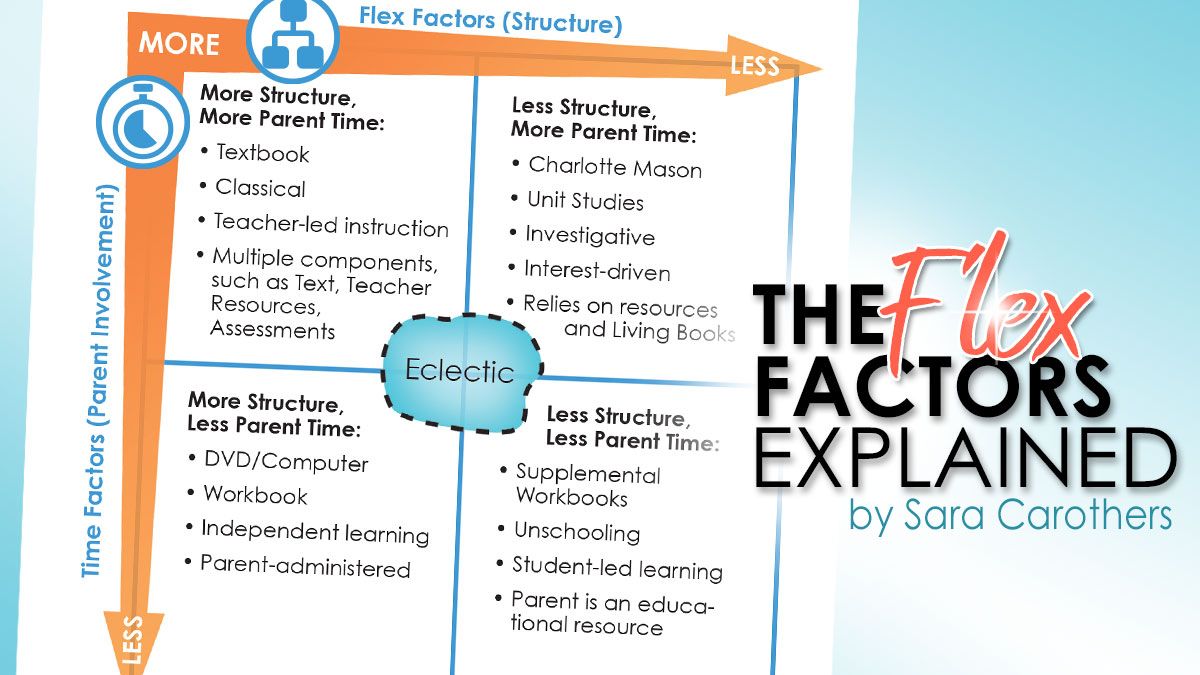

How time consuming is this curriculum to teach? What is the time investment for each lesson? Does it require advance planning and preparation time, one-on-one instructional segments, or both? These are all important considerations when it comes to making a curriculum decision. We convey this information in our orange “Teacher Involvement Time” icon and it is also the part of the FAMILY Way acronym that takes YOU into account. YOU are an important part of the success equation!
The 3 “Teacher Involvement Time” icons that we use are: low, medium, and high. You might be curious how these translate to curriculum teaching expectations. Here is a quick overview:

Low Parent Inolvement: Student-led materials; parent acts as a facilitator. These are often the workbook-style curricula that a student is expected to complete independently. However, don’t assume all is fine here. Check in daily, ask questions from their workbook, pay attention to the assessments—maybe offer an essay prompt to dig a little deeper. A student left to their own devices can either excel or falter in this format. If they “just want to get it done,” ask yourself if they are really learning from the curriculum.

Medium Parent Involvement: A blend of parental direction and student independence. May flex based on the student’s age, ability, or the curriculum. Sometimes a program is considered medium when it is low prep and high interaction. Your time is saved on the planning end and prioritized intentionally during the lesson itself. This is often ideal. Even children who like to be on their own appreciate some purposeful instruction time to gain clarity.

High Parent Involvement: Teacher-led lessons; may utilize discussions, hands-on activities, and working together. Unit studies are often in this category. There is a lot of planning. A lot of interaction. And a lot of pay-off. A lot of connections are made. A lot of retention installed that you can then build upon. Students often contribute ideas as curiosity takes the lead. The path may be winding, but it will be interesting and memorable.
Your time is valuable, and your energy must hold up in a variety of ways. Your home is a balancing act of parenting, teaching, meals, cleaning, transportation, spouse, extended family, and rest, and sometimes it can all seem to weigh on your shoulders. Deciding when a child needs more time from you is an exercise in discernment.
Here are some scenarios to consider:
- You have an auditory processor. These kids need conversation to digest new information and connect it to existing knowledge. They do not easily read and remember. Maybe you can encourage them to gradually stretch out of their comfort zone. Teach them to read some on their own, make a few notes, and then discuss with you.
- You have a child struggling with a particular skill. This is not the time to have a child work on their own. Eye contact, variable instruction, discussion, practice, and reinforcement are all going to help this child get over the hump. Provide opportunities for them to practice outside of the lesson—maybe play a card or dice game, or make a word puzzle to solve as a demonstration of mastery.
- You have a child who is easily distracted. You are better off spending short instructional time with brief practice sessions than you are sending this child off to complete a task on their own. Odds are they will rush through and not learn anything, or drag out the work in a way that is a waste of time. Teaching them to be efficient in their learning time by setting a timer can help. Agree to a set time, maybe 10 minutes, of full engagement followed by a brain break.
Remind yourself that as a homeschool parent, you get to witness those magic moments when a child gets it. Share those moments with your child! Reference these breakthrough moments when they are having a tough time later. Be there to empower your child and grow their confidence and curiosity. It’s easy to think of time-consuming as something to avoid, but the return on investment is priceless.