Ask a veteran homeschooler how to keep track of grades. You will receive a myriad of answers: from “Buy a teacher’s grade book and daily record attendance and grades” to “Grades? Why bother!” As a homeschool parent, have you wondered whether it is necessary to keep track of your children’s grades?
With fall soon approaching and a new school year beginning, many of you have great expectations for a wonderful year ahead. After the summer break, some of you may feel a little apprehensive about starting a new year while others are excited and ready to begin! Wherever you stand, one united goal for all of us is to be as organized as possible. Looking back, there are a few things that helped me keep my years running smoothly.
Are you a parent of a reluctant reader waiting for your child to find reading fun? Don’t give up! This perceived delay may not be about reading difficulties but more about your child recognizing the joy and the why of reading. As I talk to parents who are concerned about a child reading, we have found that nonfiction leveled readerswill repeatedly open that door for their reluctant readers.
Parents, do you ever worry that you are not “a teacher?” It's ok! I want to encourage you by reminding you that "how to teach" is not always obvious. The secret is to make connections at every step. Connect new information to existing knowledge. Connections equal retention. Retention equals learning. You may have to think about the process at first, but it will become natural, and you will turn everything into a learning opportunity.
Planner work is so much more than developing To-Do lists. It is a brilliant way to work on handwriting for littles, time management responsibilities for middles and older, and can lead to developing independence in one’s own work and priorities. The struggle to stay organized as a family unit can be an unnerving task as well. Taking intentional time to work with students to organize their own schoolwork each day and for the semester develops those self-management skills and can be a huge help for busy parents.
Everywhere we go, there are instructions—a process. As parents, we direct our kids and as home school teachers, we give assignments. As adults, many of our tasks are intuitive. However, giving directions and helping our children learn how to follow them presents challenges. How do we help our children learn how to follow directions and complete tasks?
When it comes to homeschooling your children, you might have thoughts such as, “Am I doing enough on a day-to-day basis?” or “How do I juggle teaching older and younger children?” These are valid questions most homeschoolers often ask themselves. The good news is your children are still learning a great deal regardless of your doubts. However, what are some practical things you can do to feel less overwhelmed and more confident in the homeschool year? Here are some ideas!
Social Emotional Learning - I am sure you have heard the phrase. It’s the new buzz word circulating the educational realm. This phrase may be described as 21st century skills, character education, or soft skills. You may wonder, what exactly do these terms mean?
Embarking on a lifestyle journey—and homeschooling is a way of life—means an action plan is always necessary. An action plan helps give you direction, keep you focused, hold you accountable, and bring you back on mission. But where is this helpful action plan? Well, reader, it is something you are going to develop specifically for you and your family!
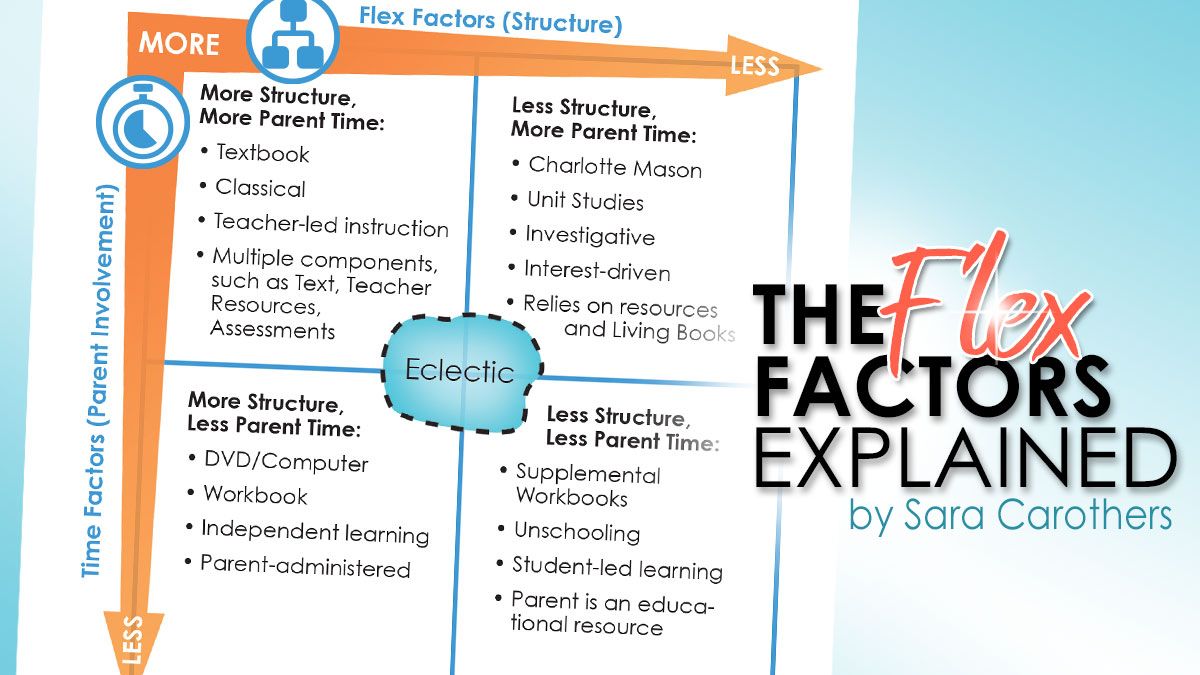
If you’re familiar with our “FAMILY Factors” for choosing curriculum and have thought through your family’s goals and unique characteristics, then the Flex Factors chart will help you put curriculum options in perspective. Think specifically about your available time to homeschool.
Remember that beautiful homeschool plan you made in August? The carefully chosen curriculum, the schedule that looked completely doable, and the vision of everyone happily getting their work done each day? And then the school year started. In August, we make plans based on what we think our...
You made an important decision to homeschool your children, and with it comes a lot of changes. Walking away from the rhythm and structure of the school day might leave you a little overwhelmed. But take heart, even though there are big changes, the blessings will be plentiful! Many years ago, my...
Reading aloud equips your children with a personal toolbox they’ll use throughout their lives as readers, learners and communicators. In our busy and demanding home school lives, though, making time for this activity can be a challenge. In Part 1, we discussed the Why of reading aloud to all ages....
Snuggle up before bedtime, pull out a picture book, and read to your preschooler. Many families read to their children in the early years. They know that reading aloud plays a significant role in a preschool child’s thinking and language development. Reading aloud to preschoolers increases their...
Lesson plans done. School books organized and tucked neatly on the shelf. Pencils sharpened. Meals planned. Laundry caught up. The conditions are PERFECT for back to (home)school! In my mind, I can see your total look of despair and eye rolling. That’s ok! Looking back on 15 years of homeschooling,...