February may be the shortest month of the year, but it’s packed with presidential history! It’s the month of Abraham Lincoln’s birthday (February 12, 1809) and the season when many families and schools observe Presidents’ Day. That makes it the perfect time to step into the life of a man whose journey stretched from a dirt-floor cabin…all the way to the White House!
You might start by asking your kids if they know which president was nominated to the Wrestling Hall of Fame because he was an incredible wrestler in his youth—and give them a hint that his face is on the $5 bill and the penny! Yes, that’s right… Abraham Lincoln! He is one of the most recognizable presidents in US history. What do your kids remember about him? A tall hat? A long beard? His towering height? Before diving in, take a moment to look at his portrait together. What do they notice first? What type of person do they imagine he was just from his expression?
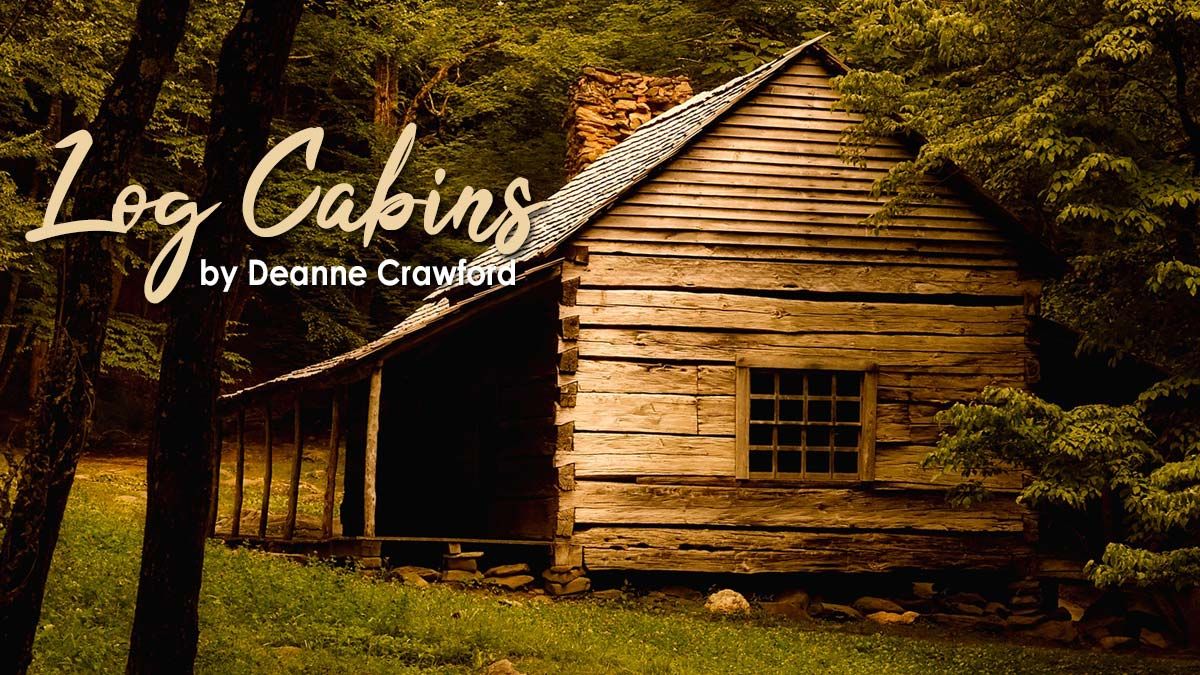
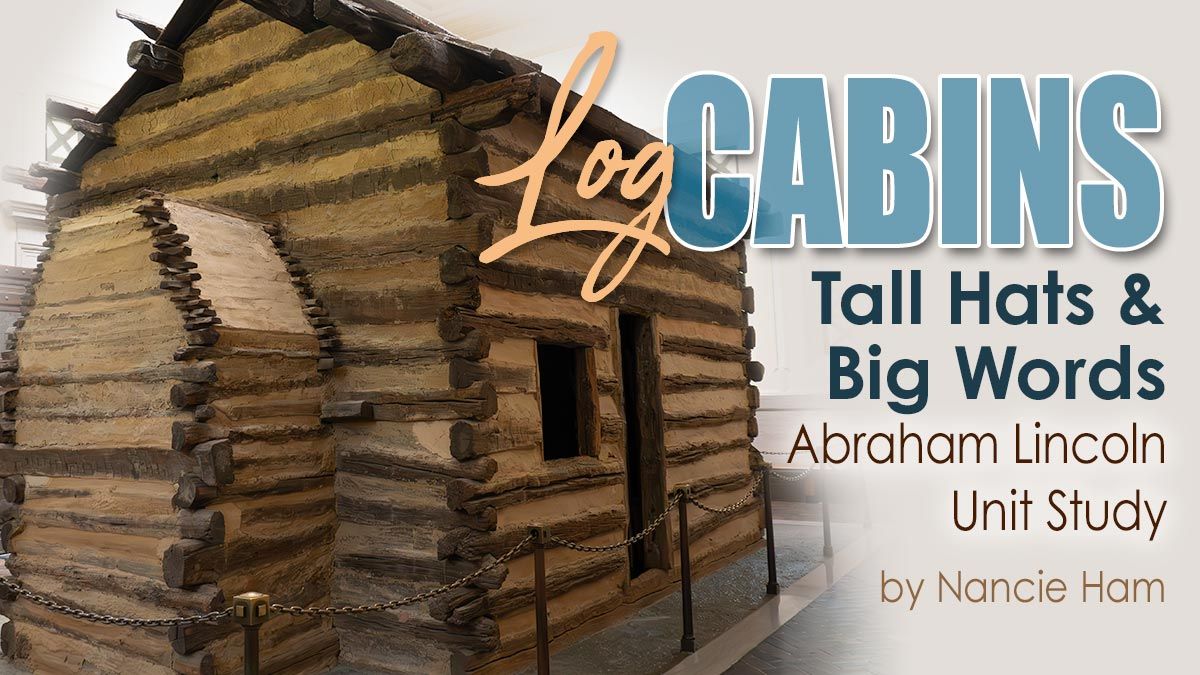
Lincoln’s story begins in Kentucky, where he was born in a one-room log cabin built by his father. Take a virtual trip to his birthplace through the National Park Service and learn about the type of cabin he lived in with his mother, father, and older sister, Sarah. It was very small—about 16’ x 18’. Try measuring it out on the floor with string and imagine 4 members of your family eating, sleeping, and living every day together in that space. Could you do it? What would be the hardest part?
But how were these cabins actually built? Frontier families couldn’t go to a hardware store and buy supplies! They used trees from the land around them and notched the ends of the logs to fit together tightly so nails weren’t needed. This video on log cabin building shows, step-by-step, how logs are stacked and corners interlocked to form sturdy walls. After watching, invite your children to draw their own cabin using a simple guided art lesson. As they draw, talk about what life would be like in a log cabin. For hands-on fun, build a small model together using craft sticks while watching this tutorial. This helps them understand how notched, crisscrossed corners locked the logs together and made everything sturdy long before nails were common on the frontier. Younger kids will enjoy building this popsicle-stick cabin on paper or coloring a log cabin picture. You might even try a family “cabin night.” Turn off the lights, read and eat by candlelight, and imagine life without electricity!
Lincoln’s family later moved to Indiana and then to Illinois, each time clearing the land and building a new cabin. Pull out a map and trace that journey together—it’s amazing to see just how far they traveled without cars or highways.
Abe’s family was poor, and he had less than a year of formal schooling. His father never learned to read or write and signed his name with only a mark. His mother, who could only read a little, taught him what she could before she died when he was nine. But Abe was desperate to learn more! He borrowed books whenever he could and read by firelight after long days of work. Eventually, he read the Bible, Aesop’s Fables, and Shakespeare. These books and stories helped shape him into one of the most well-spoken leaders in history. Here is a kid-friendly overview of his early life. There are no photographs of Abraham Lincoln as a child because photography wasn’t widely available yet, but by the 1840s it was, so you can find plenty of photographs of him later in life.
Lincoln didn’t just like words, he also liked numbers! Here’s a real math problem involving interest and fractions he worked on when he was about seventeen years old that older students can practice. It was copied from Lincoln’s own handwritten notes, showing that he enjoyed solving real-life math problems.
When Lincoln left home, he moved to New Salem, Illinois, where he tried his hand at several jobs—working in a general store, serving as postmaster, and even joining the local militia. It was also during this time that Lincoln became known as a skilled frontier wrestler, earning the respect of the rowdy young men in town—not just for his strength, but for his fairness and calm nature. Today, Lincoln’s New Salem is a reconstructed historic village where visitors can see what frontier life looked like in the 1830s. If you can’t visit in person, you can still take a video tour here!
Remember when you first looked at Lincoln’s face and wondered what kind of person he might have been? One story from Lincoln’s time in New Salem shows his character perfectly. One evening after closing the store, he realized that a customer paid him six cents too much. Even though she lived miles away, he walked all the way to her house to return the money! Stories like this spread and before long, people were calling him “Honest Abe.” Here’s a fantastic video with many stories of how he rightfully earned his nickname.
Lincoln taught himself law, became a lawyer, and entered politics. Families can take a virtual tour of his home in Springfield, Illinois, where he built his law career and prepared for the presidency. His love of words followed him into public life. One of his most famous speeches is called the Gettysburg Address. It’s short—only about two minutes long—but contains some of the most remembered words in American history! Lincoln reminded the country that the war was about freedom and a government “of the people, by the people, for the people.” His words were powerful. Listen together, then challenge each child to write a very short speech on something they care about (you might be surprised how passionate they get!).
Lincoln’s story didn’t stay small-town for long. In 1861, he became the 16th president of the United States, just as the country was breaking apart. Southern states left the Union, and the Civil War began. Lincoln faced enormous pressure and heartbreaking decisions as he tried to hold the nation together. He spent long hours reading reports, meeting with leaders, and encouraging soldiers.
Daily life for soldiers looked very different from life at home, especially when it came to food. Civil War soldiers didn’t eat fancy meals. Many lived on rations like hardtack—a rock-hard cracker made from flour, water, and salt that could last for months (or decades!) without spoiling. In fact, did you know that authentic hardtack from the Civil War still exists in museum collections today? You can try making your own hardtack using a simple historical recipe. Kids usually decide pretty quickly they’re thankful for modern snacks!
History is often best understood when you can see it and touch it. I love using interactive Civil War battle maps that let students click and explore where important events happened. It helps show that history isn’t just words in a book, but real places and real people. Graph distances between major Civil War battle sites and calculate the time it took soldiers to march between them. For hands-on learners, try adding a few Civil War STEM projects, like building a candle-powered steamboat or a pinhole camera. These kinds of projects help bring history to life in a meaningful way. I also love having some printable activities on hand, and this vocabulary word mat helps older students learn, discuss, and write about the war. There are also some wonderful kid-friendly Civil War podcasts and videos.
To help kids connect even more with this time period, play music people might have heard during the war. Listening to this collection of Civil War songs from the Library of Congress can set the mood and remind us that music has always been a part of life, even in times of war.
Great literature is often the “special ingredient” that makes everything else come together! Kids love stories—Pink and Say is a great option for younger kids and Across Five Aprils is great for older ones. Books like these bring this time period to life, providing context to help students understand and remember what they’ve learned.
During the Civil War, Lincoln also used something very modern for his time—the telegraph. He often visited the War Department telegraph office to read messages from generals and send instructions. Even though there was no internet yet, it was one of the first times a president could follow a war almost in real time. In a way, it was the 1860s version of instant messaging!
This video explains Morse Code and shows how Lincoln used the telegraph as his Civil War “command center,” allowing him to send and receive messages faster than any president before him.
Life in the White House wasn’t quiet or formal all the time. Lincoln and his wife, Mary Todd Lincoln, had 4 sons, though only one lived to adulthood. Their youngest, Tad, was known for being full of energy and sometimes even interrupting important meetings! Lincoln was a loving father and often let his children play in his office. He even gave his sons Tad and Willie two pet goats named Nanny and Nanko—and honestly, that detail alone makes the White House feel a lot more like a real home! The goats became well known for their White House mischief!
In 1863, Lincoln issued the Emancipation Proclamation, declaring enslaved people in Confederate States to be free. This bold decision changed the direction of the war and the future of our country. Families can explore this historic document through the National Archives and even listen to it being read out loud.
Lincoln believed deeply in freedom and equality, and his leadership helped move the nation toward the end of slavery. Older students can look up the 13th amendment, which permanently ended slavery in the United States.
Sadly, Lincoln did not live to see all the results of his work. Just days after the Civil War ended in 1865, he was assassinated at Ford’s Theatre. You can explore a virtual tour of Ford’s Theatre, the historic site where this took place, and learn more about that tragic moment in history.
His loss deeply saddened the nation, but his words and leadership will never be forgotten. Today, Lincoln is honored at the Lincoln Memorial in Washington, D.C., where visitors from around the world come to read his words and remember his legacy. You can even take a virtual tour of the memorial online.
Lincoln’s life reminds us that leaders don’t always start off in grand places. Sometimes they start off in tiny cabins, with big curiosity and a love of learning. As your family explores his story this month, you’ll be encouraged by how character, perseverance, and wise words can shape history.