This second edition is a major update visually as well as in
content. Integrating an appropriate, well-planned, and welcoming visual
presentation, this new edition adds significant changes in content, updated writing
samples, essay checklists, and more. While the general type of writing
assignments (personal, expository, argumentative, compare/contrast, and
research paper) has not changed from the first edition, the content and the
order of the writing prompts have.
Students are ready for this course if they have mastered
grade-level-appropriate sentences and written some compositions. The 91 video and
text lessons are divided into units. Students start with familiarizing
themselves with the writing process: choosing quality word choices and vivid
language, building effective sentences, and handling common writing and grammatical
problems. They’ll focus on fragments and common issues that arise when
researching (paraphrasing, summarizing, and citing information). Then, the attention
turns to audience and purpose. Students will first focus on the paragraph level
(expository, argumentative, compare and contrast). After a quick review of
essay writing, students will practice applying their skills in personal,
expository, argumentative, and compare/contrast essay assignments. For each
essay, the curriculum provides ineffective and effective student examples that
provide helpful comparisons, which is so beneficial for an independent learner.
Students practice developing their voice and applying it in a variety of
writing modes. The final 15 lessons help students systematically write and then
culminate the research project with an oral presentation. Students end the
course by evaluating their writing skills.
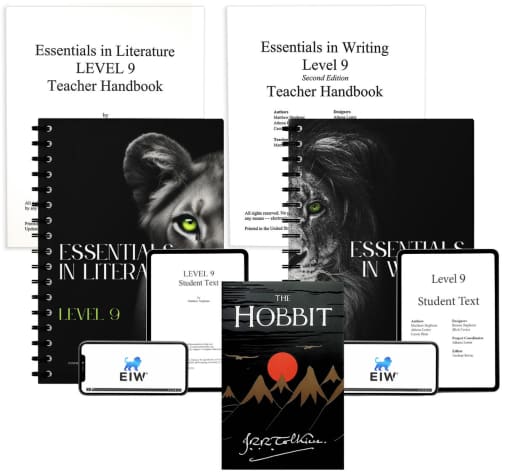
To teach one student, you’ll need to purchase either the Bundle (which includes the student book, the
teacher handbook, digital student and teacher materials, and the online video
instruction) or the Bundle
with Assessment (which adds a physical and digital assessment/resource
book). If you wish to test your student’s skills, this consumable Assessment/Resource is
available separately and provides 8 assessments on word choice, sentence
structure, common problems, and each essay type. This resource also provides
writing organizers, writing checklists, and a complete answer key. The bundles
also include a 44-page Teacher Handbook that provides brief instructions
for grading essays; a checklist for each writing assignment; and 100-point
rubrics to help students (and parents) evaluate writing assignments both at the
sentence level (such as transitions, word choice, mechanics, and thesis) and at
the essay level (such as thesis, opening and closing paragraphs, and
citations). A limited number of fee-based scoring services are available directly
from the publisher. Each student taking the course will need a consumable student book. To build a
complete language arts program, combine this course with your choice of a
literature course, or select EIW’s literature and composition combination. ~ Ruth