These icons are designed to help you quickly understand and learn important information about our products.
Teaching Method
Traditional
Teacher-centered curriculum commonly used in classrooms that may include a text, teacher manual, tests, etc.
Charlotte Mason
A methodology based on the work of a 19th century educator who maintained that children learn best from literature (Living Books), not textbooks.
Classical
A methodology based on the Latin Trivium (three stages of learning), including the grammar stage (memorization and facts), logic stage (critical thinking), and rhetoric stage (developing/defending ideas).
Unit Study
A thematic or topical approach centered around one topic that integrates multiple subject areas.
Montessori (Discovery)
A methodology based on the work of a 20th century educator that emphasizes student and sensory-driven discovery learning and real-life applications.
Other
Other methodologies
Religious Content
Secular
Contains content contrary to common Christian beliefs (i.e. evolution).
Neutral
Avoids religious or theoretical topics or presents multiple viewpoints without preference.
Christian/Religious
Faith-based or including instructional religious content.
Learning Modality
Auditory
Learns through listening, talking out loud or reading out loud.
Visual
Learns through seeing, prefers written instructions and visual materials.
Kinesthetic/Tactile (Hands-On)
Learns through moving, doing and touching.
Multi-Sensory
Curriculum that employ a variety of activities/components.
Presentation
Sequential
Curriculum progresses through well-defined learning objectives. Emphasizes mastery before moving to the next topic.
Spiral
Topics and concepts are repeated from level to level, adding more depth at each pass and connecting with review.
Conceptual/Topical
Focus is on the “why,” often with a unifying concept as well as specific skills; coverage may be broader.
Teacher Involvement
Low Teacher Involvement
Student-led materials; parent acts as a facilitator.
Medium Teacher Involvement
A mix of teacher-led time and independent student work.
High Teacher Involvement
Teacher-led lessons; may utilize discussions, hands-on activities and working together.
Additional Materials Required
No other materials needed
Everything you need is included.
Other Materials Required
There are additional required resources that are a separate purchase.
Other Materials Optional
There are additional resources mentioned or recommended but are not absolutely necessary.
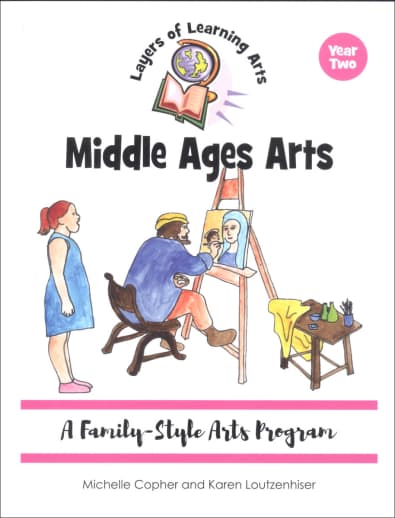
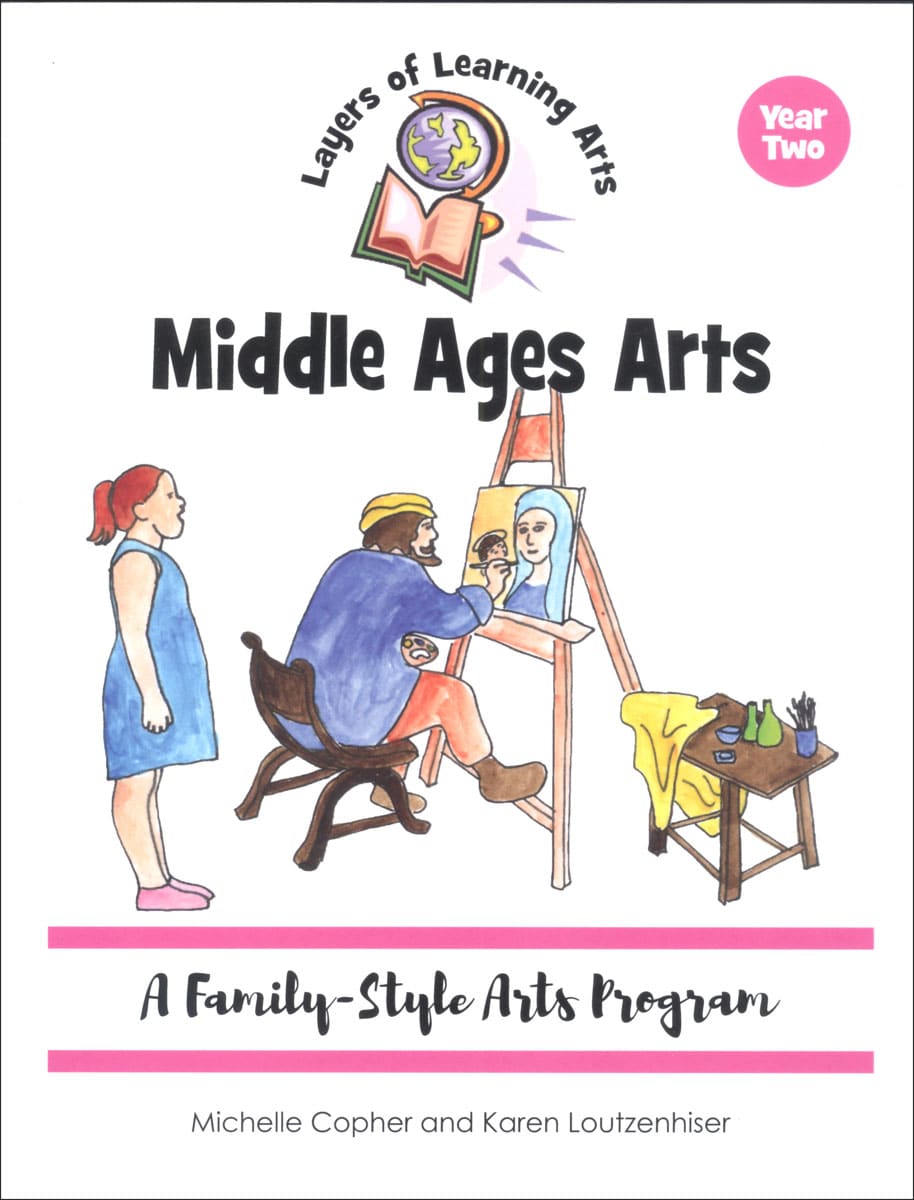
Layers of Learning Art is a series of pre-planned
unit studies you can use with the whole family. Middle AgesArts
is the second book in their chronological instructional units. Present the
lesson to the group, then pick and choose which activities suit your needs
best. The students could share their opinions too! Each of the 9 units lasts
about a month and corresponds to the History Unit of the same
period if you wish to combine art and history! As a world study, this book
includes Byzantine art, Celtic and Viking art, Islamic art and architecture,
east Asian art, Pacific Islands art, Gothic & Romanesque art, Medieval
England stories and art, Native American art, and the Renaissance.
Taino Tales, the Legend of
Coqui retold by Vicky Weber
Publisher's Description of Layers Learning Art: Middle Ages Arts (Year Two)
Middle Ages Arts is an arts program that teaches students the history of
art, while students are doing creative art projects. This course covers
medieval through Renaissance painting, sculpture, music, stories, and
architecture in Europe; Islamic art through the Colonial era; painting
and architecture in China and Japan, dance and visual arts of the
Pacific Islands; and carvings, paintings, and other visual arts of the
American civilizations including the North American tribes, Olmec, Maya,
and others. You will learn about paintings, sculptures, theater,
architecture, folk arts, and music during this course. For use with age 6
to 18 years.
Family-style
art for all ages! With projects you pick and choose, each unit is designed to
last about a month with activities that allow each child to work at their
ability level. As a unit study, you will select from the videos provided and
choose offerings from your local library that suit your needs and interests.
The guide provides you with a framework for the lessons with information to
build a base of knowledge. From here, you decide how to proceed!
Step 1: Each unit starts with a library book list. The books
are identified by reading level. These will become your unit resources for the
month.
Step 2: Choose hands-on activities that best suit your
family. There are several to choose from in each unit. There is a variety of
project types for all sorts of learners.
Color photos
and clear instructions make for a pleasing experience. Prepared unit studies
like this are a time saver for parents who like the idea of unit studies but
need some guidelines. ~Sara