Magic happens at the board! Back when I was a teacher, my students solved math problems, wrote spelling words, practiced writing letters, constructed proper sentences, and more at the old-fashioned chalkboard every day. If a student struggled with a math problem, I would encourage them to take it to the board and almost always they would figure it out. I've found that they brought amazing benefits, and occupational therapists agree. Let's talk about some of those benefits!
We commonly receive calls asking for curriculum that is presented via online or DVD, and while these can be great options for home educators, they do present the issue of how to keep your student engaged during the learning process. Here is some advice that you can apply with your own children!
Something we often hear from parents is how much they are learning about history when homeschooling their children. We offer some amazing options for history in a variety of formats. But is that the difference? Is that what is speaking to you? Or is it that you have more life experience and are applying your context to the content being taught. I would argue the latter. So, how do you make history relatable for your students?
Spelling does not come naturally for all children. In our homeschool, I had one child who naturally excelled at spelling, while my second child struggled with spelling until high school. Over time, his spelling improved with creativity and effort. If you have a struggling speller, here are a few things that we did at home that you can try.
Fortunate to be in a state that does not require submission of grades, keeping grades is still an individual decision for homeschool families. Join veteran homeschoolers, Amber and Deanne, as they share their reasons for choosing to (and not to) keep grades!
Ask a veteran homeschooler how to keep track of grades. You will receive a myriad of answers: from “Buy a teacher’s grade book and daily record attendance and grades” to “Grades? Why bother!” As a homeschool parent, have you wondered whether it is necessary to keep track of your children’s grades?
Parents, do you ever worry that you are not “a teacher?” It's ok! I want to encourage you by reminding you that "how to teach" is not always obvious. The secret is to make connections at every step. Connect new information to existing knowledge. Connections equal retention. Retention equals learning. You may have to think about the process at first, but it will become natural, and you will turn everything into a learning opportunity.
Everywhere we go, there are instructions—a process. As parents, we direct our kids and as home school teachers, we give assignments. As adults, many of our tasks are intuitive. However, giving directions and helping our children learn how to follow them presents challenges. How do we help our children learn how to follow directions and complete tasks?
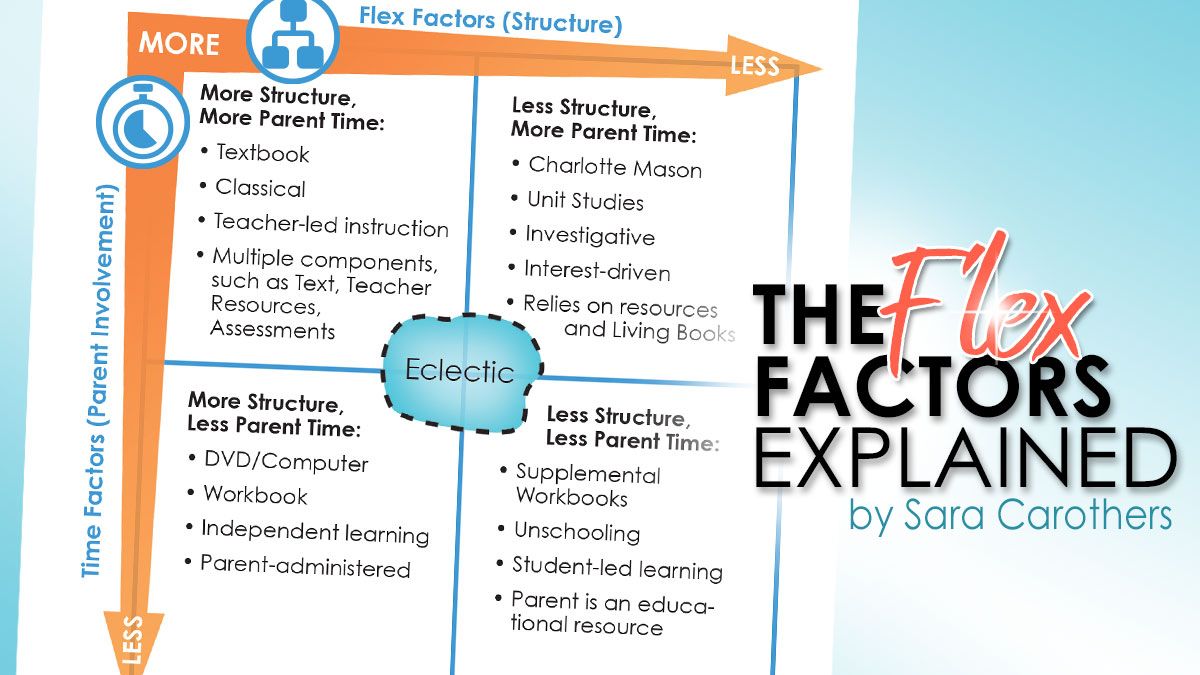
If you’re familiar with our “FAMILY Factors” for choosing curriculum and have thought through your family’s goals and unique characteristics, then the Flex Factors chart will help you put curriculum options in perspective. Think specifically about your available time to homeschool.
The latest buzz in math nowadays seems to be teaching kids the “why” behind math and emphasizing multiple strategies when working math problems. While there is nothing wrong with these pedagogies and there are huge benefits to these approaches, one must not forget the importance of teaching simple arithmetic. Let's look at ways to approach learning and mastering these basic math skills.
Remember that beautiful homeschool plan you made in August? The carefully chosen curriculum, the schedule that looked completely doable, and the vision of everyone happily getting their work done each day? And then the school year started. In August, we make plans based on what we think our...
You made an important decision to homeschool your children, and with it comes a lot of changes. Walking away from the rhythm and structure of the school day might leave you a little overwhelmed. But take heart, even though there are big changes, the blessings will be plentiful! Many years ago, my...
Reading aloud equips your children with a personal toolbox they’ll use throughout their lives as readers, learners and communicators. In our busy and demanding home school lives, though, making time for this activity can be a challenge. In Part 1, we discussed the Why of reading aloud to all ages....
Snuggle up before bedtime, pull out a picture book, and read to your preschooler. Many families read to their children in the early years. They know that reading aloud plays a significant role in a preschool child’s thinking and language development. Reading aloud to preschoolers increases their...
Lesson plans done. School books organized and tucked neatly on the shelf. Pencils sharpened. Meals planned. Laundry caught up. The conditions are PERFECT for back to (home)school! In my mind, I can see your total look of despair and eye rolling. That’s ok! Looking back on 15 years of homeschooling,...