A major update (in presentation and content), this second
edition integrates a welcoming visual presentation with updated writing
samples, essay checklists, and more. While the general type of writing
assignments (personal, expository, argumentative, compare/contrast, and
research paper) hasn’t changed, the writing prompts have. This second edition layout is extremely user-appealing, and all teaching, examples, and even repeated concepts are restated. This course text and the updated
videos do a good job of engaging a student. Some skills taught in this course
include clarifying meaning through quality word choice, communicating clearly,
and developing an academic voice and personal voice.
A student is ready for this course if they’re able to write
grade-level-appropriate sentences and have written some compositions. There are
91 video and text lessons divided into 2 units. First, students will tackle
writing skills at the sentence level by learning about quality word choice, vivid
language, transitions, varied sentences, paraphrasing, summarizing, and direct
quotations. Then, 6 lessons quickly overview paragraph writing (expository,
argumentative, and compare/contrast). Most of the course is spent writing
essays: personal, expository, argumentative, and a compare/contrast persuasive
essay. Lastly, students spend 16 lessons learning to write research papers,
with a final presentation. Students end the course by comparing their first
composition to their final—a worthy evaluation for every student.
If you’re coming to this level from EIW’s grade 9, a quick
overview of the level 10 Table of Contents may seem like a repeat. The
repetition of composition styles (expository, argumentative, etc.) is
intentional. Yet, tasks are always unique to the grade level and students will build
upon, refine, and extend their previously learned skills. While some
assignments have a slight classroom-related theme (such as “many schools are
cutting art programs…”), most are still very homeschool friendly: describe
your plans for an upcoming holiday; should public libraries be allowed
to ban certain books? Students will also learn from others’ writing: two student
samples per assignment provide examples of hitting and missing the mark in
writing tasks.
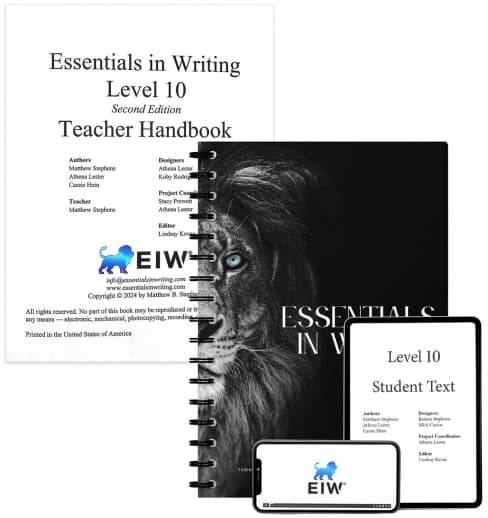
To teach one student, select either a complete course or complete course with the
consumable Assessment/Resource Book. The complete course includes the
consumable Student
Workbook; the 42-page Teacher Handbook with syllabus, student
answers, and more; short online streaming video lessons; alternative
instructional strategies for struggling students; and free digital versions of
each of these. The complete course with assessments includes all the previously
listed items plus the consumable Assessment/Resource book. These consumables are also
available separately.
Scoring services are available from the publisher as a
separate fee; quantities are limited. For a complete language arts program,
combine this course with your choice of a literature course or select EIW’s
literature and composition combination.
~ Ruth