
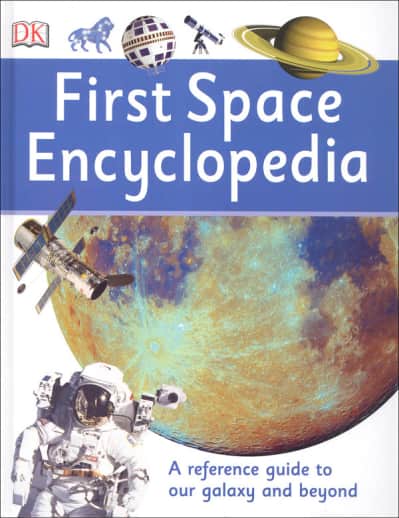
DK always does a fantastic job with visually stunning encyclopedias, and nothing quite stirs the imagination more than a full-color encyclopedia on space. This encyclopedia explores all aspects of space as we know it. The first section asks the question "What is space?" and explores space, stargazing and observatories, our galaxy, other galaxies, and nearby stars. Section two is all about the exploration of space: astronaut training, space vehicles, the moon, space stations, working and living in space, and explorations further afield. The third section details all of the major bodies in our own solar system, including the sun and some of the moons. Section four gives readers a look at comets, meteors and asteroid belts. The next section deals with mysteries that may or may not ever be answered (or may not even be issues, depending on your worldview): UFOs, life on other planets, the Big Bang(!?), black holes, other earths, and birth and death of stars. The last section has ideas and information on enjoying and learning about space on your own, followed by a reference section that contains a glossary and index. The plethora of photographs, enhanced telescope/probe images, and artist's impressions bring space down to an attainable level, and the bite-sized text is perfect for young users. As a note, the book does promote some evolutionary theories. 128 pgs, hc. Zach
First Space Encyclopedia
Description
Follow the Sassafras twins on an "out of this world" adventure with this one semester course that covers the planets (includes dwarf planets), the Earth's sun, the moon and lunar cycles, asteroids, black holes and comets, stars and constellations, galaxies and our solar system, telescopes, space probes, satellites, rockets, and the space shuttle. Numerous living book suggestions are included in the Guide. Scheduled within the lessons are the following encyclopedia resources: Basher Science Astronomy (item #002707) for 1st-2nd grade, theUsborne Children's Encyclopedia (item #028433) and DK First Space Encyclopedia (item 044361) for grades 2-4, and the Kingfisher Science Encyclopedia (item #010198) for grade 4-6. (Please note these grade levels are simply general recommendations, families can choose one or more of these resources that best fit their individual family). Quizzes and activity sheets are included in the appendix, which are reproducible for your immediate family. Four day per week schedule, with suggested optional activities, which provides families flexibility. ~Deanne
| Product Format: | Hardcover Book |
|---|---|
| Grades: | 1-6 |
| Brand: | Dorling Kindersley |
| ISBN: | 9781465443434 |
| Length in Inches: | 11.5 |
| Width in Inches: | 9 |
| Height in Inches: | 0.375 |
| Weight in Pounds: | 1.8 |