These icons are designed to help you quickly understand and learn important information about our products.
Teaching Method
Traditional
Teacher-centered curriculum commonly used in classrooms that may include a text, teacher manual, tests, etc.
Charlotte Mason
A methodology based on the work of a 19th century educator who maintained that children learn best from literature (Living Books), not textbooks.
Classical
A methodology based on the Latin Trivium (three stages of learning), including the grammar stage (memorization and facts), logic stage (critical thinking), and rhetoric stage (developing/defending ideas).
Unit Study
A thematic or topical approach centered around one topic that integrates multiple subject areas.
Montessori (Discovery)
A methodology based on the work of a 20th century educator that emphasizes student and sensory-driven discovery learning and real-life applications.
Other
Other methodologies
Religious Content
Secular
Contains content contrary to common Christian beliefs (i.e. evolution).
Neutral
Avoids religious or theoretical topics or presents multiple viewpoints without preference.
Christian/Religious
Faith-based or including instructional religious content.
Learning Modality
Auditory
Learns through listening, talking out loud or reading out loud.
Visual
Learns through seeing, prefers written instructions and visual materials.
Kinesthetic/Tactile (Hands-On)
Learns through moving, doing and touching.
Multi-Sensory
Curriculum that employ a variety of activities/components.
Presentation
Sequential
Curriculum progresses through well-defined learning objectives. Emphasizes mastery before moving to the next topic.
Spiral
Topics and concepts are repeated from level to level, adding more depth at each pass and connecting with review.
Conceptual/Topical
Focus is on the “why,” often with a unifying concept as well as specific skills; coverage may be broader.
Teacher Involvement
Low Teacher Involvement
Student-led materials; parent acts as a facilitator.
Medium Teacher Involvement
A mix of teacher-led time and independent student work.
High Teacher Involvement
Teacher-led lessons; may utilize discussions, hands-on activities and working together.
Additional Materials Required
No other materials needed
Everything you need is included.
Other Materials Required
There are additional required resources that are a separate purchase.
Other Materials Optional
There are additional resources mentioned or recommended but are not absolutely necessary.
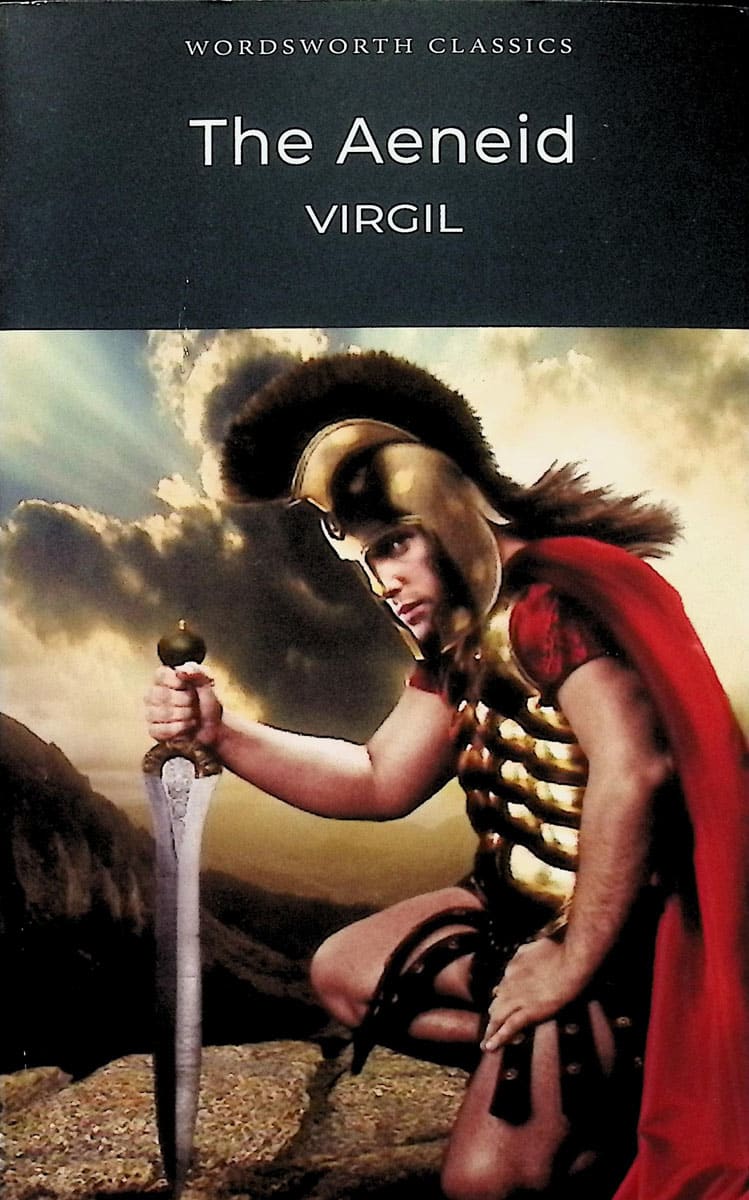
Publisher's Description of The Aeneid by Virgil (Wordsworth Classics)
With an Introduction, Notes and Glossary by Mandy Green, University of Durham.
Translated by Michael J. Oakley.
The Aeneid is Virgil’s Masterpiece. His epic poem recounts the story of Rome’s legendary origins from the ashes of Troy and proclaims her destiny of world dominion. This optimistic vision is accompanied by an undertow of sadness at the price that must be paid in human suffering to secure Rome’s future greatness. The tension between the public voice of celebration and the tragic private voice is given full expression both in the doomed love of Dido and Aeneas, and in the fateful clash between the Trojan leader and the Italian hero, Turnus.
Hailed by T.S. Eliot as ‘the classic of all Europe’, Virgil’s Aeneid has enjoyed a unique and enduring influence on European literature, art and politics for the past two thousand years.
Wordsworth classics are complete, unabridged editions of timeless literature and poetry offered at a very affordable price. Each one is delightfully illustrated and carefully reprinted to appeal to the general public while preserving its high quality. Some of the most popular novels to study in school, such as Uncle Tom's Cabin and Charles Dickens' The Pickwick Papers, include more in-depth, insightful introductions as well as helpful notes in the back of the book to offer readers definitions or background to words or phrases appearing in the text. ~ Steph