
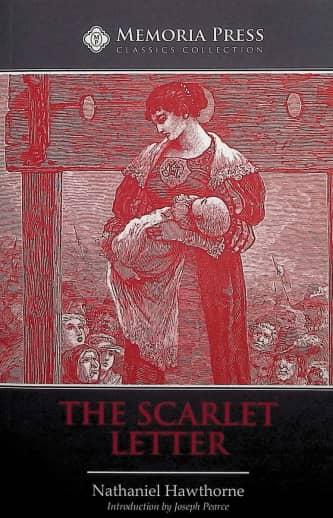

The Scarlet Letter
As we entered into the Golden Age of the American Novel in the mid-nineteenth century, the first truly pioneering work was Nathaniel Hawthorne’s The Scarlet Letter. Published two years ahead of Harriet Beecher Stowe’s Uncle Tom’s Cabin and a year before Melville’s Moby Dick, it blazed a trail ahead of later literary classics. It is, therefore, not merely one of the truly canonical works of American literature—and immensely popular in its time—but also preeminent in terms of historical influence on what followed. It is singularly and particularly homegrown; it is American. It is the first work of literary art from America worthy to stand shoulder to shoulder with the greatest novels of the English language. It is old in the sense that it owes a debt to the existing literary tradition, but it is also new. It is not England that speaks in its pages, but New England.
This is a story of the corrupting power of sin, of repentance, and of redemption. The scarlet letter that Hester Prynne wears is the symbolic heart of the story, in full view of the reader as it is in full view of the characters in the story. It is the heart of the story itself, a symbol not merely of sin, but of sin acknowledged, sin confessed, sin exposed. And—even more profound—it is the sin exposed that exposes the hypocrisy of those who keep their sins hidden, unacknowledged, unconfessed.
Our study guides train students to become active readers. Students think about what they have read and learn to identify the important content of each story. These study guides also teach the advanced skill of composing answers that are both clear and concise, a difficult skill at any age. Writing is thinking, and good questioning stimulates the child to think and write.