
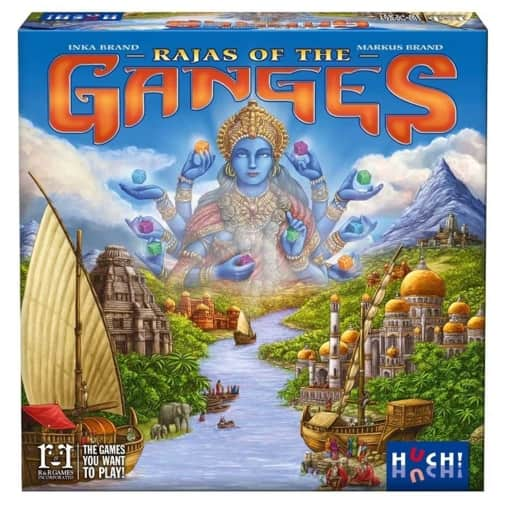
Rajas of the Ganges

SKU
055866
Grade 7-AD
Teaching Method
Traditional
Teacher-centered curriculum commonly used in classrooms that may include a text, teacher manual, tests, etc.
Charlotte Mason
A methodology based on the work of a 19th century educator who maintained that children learn best from literature (Living Books), not textbooks.
Classical
A methodology based on the Latin Trivium (three stages of learning), including the grammar stage (memorization and facts), logic stage (critical thinking), and rhetoric stage (developing/defending ideas).
Unit Study
A thematic or topical approach centered around one topic that integrates multiple subject areas.
Montessori (Discovery)
A methodology based on the work of a 20th century educator that emphasizes student and sensory-driven discovery learning and real-life applications.
Other
Other methodologies
Religious Content
Secular
Contains content contrary to common Christian beliefs (i.e. evolution).
Neutral
Avoids religious or theoretical topics or presents multiple viewpoints without preference.
Christian/Religious
Faith-based or including instructional religious content.
Learning Modality
Auditory
Learns through listening, talking out loud or reading out loud.
Visual
Learns through seeing, prefers written instructions and visual materials.
Kinesthetic/Tactile (Hands-On)
Learns through moving, doing and touching.
Multi-Sensory
Curriculum that employ a variety of activities/components.
Presentation
Sequential
Curriculum progresses through well-defined learning objectives. Emphasizes mastery before moving to the next topic.
Spiral
Topics and concepts are repeated from level to level, adding more depth at each pass and connecting with review.
Conceptual/Topical
Focus is on the “why,” often with a unifying concept as well as specific skills; coverage may be broader.
Teacher Involvement
Low Teacher Involvement
Student-led materials; parent acts as a facilitator.
Medium Teacher Involvement
A mix of teacher-led time and independent student work.
High Teacher Involvement
Teacher-led lessons; may utilize discussions, hands-on activities and working together.
Additional Materials Required
No other materials needed
Everything you need is included.
Other Materials Required
There are additional required resources that are a separate purchase.
Other Materials Optional
There are additional resources mentioned or recommended but are not absolutely necessary.
Consumable
Consumable
Designed to be written in; not reusable.
Non-Consumable
Not designed to be written in; reusable.
Our Price
$49.99 $49.99 $42.50
Rainbow Savings: $7.49
Warning
Choking Hazard
  • Small parts. Not for children under 3 years.

Description

Publisher's Description of Rajas of the Ganges
The object of the Rajas of the Ganges Game

India in the era of the aspiring Mogul empire. New lands are being gained along with great prosperity attained through the trading of silk, tea, and spices. Imposing structures such as the Taj Mahal and the Red Fort are built, and gorgeous gardens are created alongside new buildings and parks that will impress generations to come even centuries later.

At a time when the empire has almost reached its greatest dimensions and is in a phase of relative stability, players, representing rajas and ranis, are called upon to live up to the requirements of their role as venerable sovereigns. They must improve their estates into magnificent and wealthy provinces. Keeping in mind the important role of karma, players balance their growth in a demanding interplay of prestige and prosperity. The one with the most successful outcome will truly become one of the nation’s legendary leaders.

Your task in Rajas of the Ganges Game is to develop your province with the help of your workers and the clever use of your accumulated dice. In the end, you must win the race with a combination of wealth and fame. The fame track and the money track run parallel to each other in opposite directions around the gameboard. The fame markers are moved clockwise, the money markers, counter-clockwise.

As you build and expand, you attempt to increase both your fame and wealth so that your fame marker and your money marker intersect. The first player of Rajas of the Ganges to have his fame marker and his money marker converge or even pass each other on their tracks has a good chance to win. 

The course of Rajas of the Ganges Game

The game of Rajas of the Ganges proceeds over several rounds, each of which consists of several stages. In each stage, players, in turn – in clockwise order, beginning with the starting player – place one worker, pay the costs, if required, and immediately carry out the associated action. This continues until nobody can place a worker anymore. After that, each player takes his workers back, and a new round begins.

You and up to 3 other players are Rajas and Ranis in 16th century India. Players compete to develop and expand their estates as their power and influence grow. Dice play the part of resources in this worker-placement game where you must balance your rise on the dual paths of fame and riches. But never underestimate the power of good karma! 

Available now!

Ages 12+ | 2 to 4 players | Playing time 60 minutes

Details
More Information
Product Format:Other
Grades:7-AD
Brand:R & R Games
EAN/UPC:4260071879783
Length in Inches:11.625
Width in Inches:11.625
Height in Inches:3
Weight in Pounds:4.2
Videos
This product doesn't have a video
Reviews
Product Q&A