
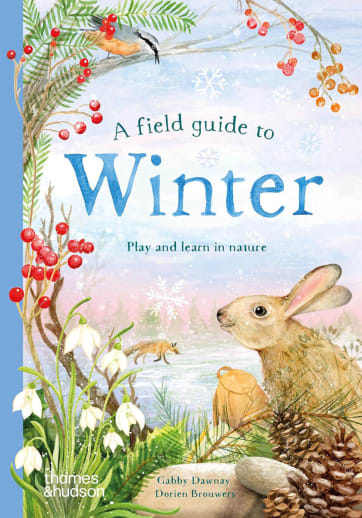
Let’s play and learn in nature guided by A Field Guide to Winter. Inspired by the Forest School, this is a helpful resource to throw into your bag as you head outside to explore. Filled with full-color, engaging, whimsical illustrations children will be captivated by again and again. Each page shares with learners’ ideas to experience the world around them during the frosty winter months. Activities include writing a bedtime story, making ice ornaments, cooking up some homemade soup, constructing nature wind-chimes, and so many more cozy ideas! There are perfect prompts and questions to ask young children and for older children they could start working on their own Nature Journal! Wonderful little poems to read aloud are scattered throughout. Kids will love learning how and why we have seasons, how to track animals in the snow, identifying evergreen trees, how to help birds in the winter, and finding everything on a winter treasure hunt! A great Winter Glossary is found in the back to encourage word development along with a Fields Notes section to guide a Nature Journal time. 64 pages, hardcover. ~Rebecca
Field Guide to Winter
Product Overview
- Take to the outdoors letting your 5-sense guide your studies of nature!
- Turn everyday outdoor time into an interactive, educational, nature walk
- Use these resources year after year for fun seasonal exploration
Description
A Field Guide to Winter is a pocket-sized introduction to the winter season. Building on children’s natural curiosity about the world around them, this book aims to establish a connection with nature at an early age that will go on to last a lifetime.
Track paw prints through the snow, make your own woodland wind chimes, identify evergreen trees, and write a bedtime story for a sleepy bear. Discover how snowflakes form and why some animals hibernate in winter.
This book features lyrical poems, hands-on crafts and activities, scientific facts, and identifier pages to help children find different animals and plants. Whether a child’s access to nature is in the form of an urban park, a private garden, a field, or a forest, there is so much to discover and experience.
Watch your children become best friends with nature in every season with the Field Guide to series. An interactive way for children to play and learn in nature guided by beautiful illustrations and short facts over seasonal observations. Each book is packed with hands-on activities, poems, fun facts, and guidance to take full advantage of your outdoor exploration, no matter the time of year. Keep your kids engaged, curious, and connected with nature through simple and creative avenues like what does mud feel like, how many different colors of leaves do you see, does the new snow taste cold and refreshing? Taking a 3-step approach to a nature study by being Curious, Creative, and Kind, kids will find all sorts of ways to connect with and experience nature. Suitable for young and older students, there is enough guidance to keep kids engaged in the changing world around them. ~Rebecca
| Product Format: | Hardcover Book |
|---|---|
| Grades: | PK-3 |
| Brand: | Thames & Hudson |
| ISBN: | 9780500653548 |
| Length in Inches: | 8.875 |
| Width in Inches: | 6.1875 |
| Height in Inches: | 0.375 |
| Weight in Pounds: | 0.6 |