
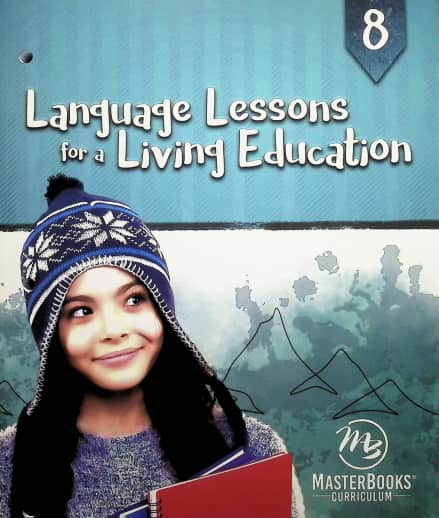

This course guides students in learning, then processing, different aspects of Christian faith. Then students will be directed to create their own statement of faith. Lessons follow a set weekly schedule. Day 1 begins with a special feature (such as a picture or Scripture study), vocabulary (taken from the nonfiction selections), and Scripture memory (John 20, and in second semester, Matthew 13:1–52 and 18:10–35). Day 2 focuses on grammar and punctuation. On Day 3, students practice their communication skills (written, verbal, nonverbal, or even using technology). Day 4 turns students to examining and responding to worldviews. In their own statement of faith (i.e., doctrinal statement), students will focus on salvation, the nature of God, the Church, and special topics (creation, heaven/hell, angels and demons, and eschatology). Students will engage with biblical content by studying referenced passages in their own Bible and also by reading the overarching themes taught in the required God’s Story. On Day 5, students review the concepts they’ve learned. Scriptures are taken from the KJV, ESV© 2001, and NIV© 2011.
The Writing Skill section includes weekly grammar study and composition assignments such as short story, paragraph, character sketch, and essays (descriptive, comparative, expository, and narrative). Following a Charlotte Mason–style approach, students will respond to quotations, pictures, hymns, and poetry. MLA formatting guidance is included. After reading and evaluating short statements on Scripture, the Trinity, Jesus, Holy Spirit, sin, salvation, marriage/family, human life and dignity, and creation (from a Protestant viewpoint), students will develop and write their own personal statement of faith as a culmination of a multi-week project. Additionally, students are encouraged to read independently. Some reading suggestions are provided in the teaching helps in the back of the book, but you’ll want to choose additional independent reading books and record them on the form provided. Lessons also provide optional bonus activities that expand on the content and themes from the week.
This course also teaches communication/interpersonal skills that fall under the category of good interpersonal communication and etiquette, such as common courtesies, voicing a complaint, resolving conflict, being a good listener, how to properly cut meat at the dinner table, and more. Some additional supplies are needed: 3x5 index cards, colored pencils, a notebook, Bible, dictionary, and independent reading books. Over 100 pages are included in the back of this text with teacher resources, student reproducibles, and an answer key. Your student is ready for this course if they can write two to three well-written paragraphs, are familiar with and have written a book report, correctly use basic grammar and punctuation, recognize abstract ideas, and are somewhat independent in daily work. Purchase the individual consumable or a convenient package with the required God’s Story. 510 perforated, 3-hole-punched pgs, sc. ~ Ruth