
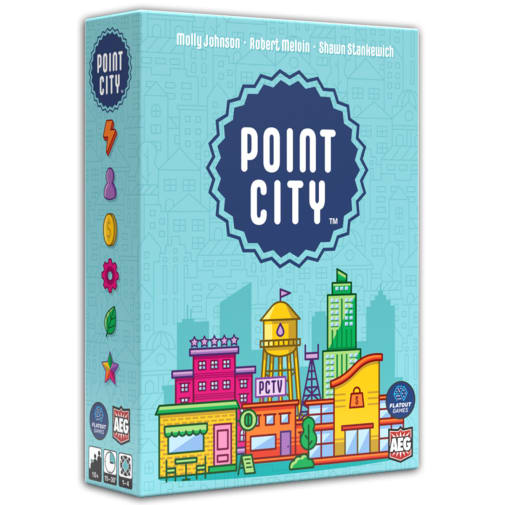
Point City Game

SKU
042876
Grade 5-AD
Teaching Method
Traditional
Teacher-centered curriculum commonly used in classrooms that may include a text, teacher manual, tests, etc.
Charlotte Mason
A methodology based on the work of a 19th century educator who maintained that children learn best from literature (Living Books), not textbooks.
Classical
A methodology based on the Latin Trivium (three stages of learning), including the grammar stage (memorization and facts), logic stage (critical thinking), and rhetoric stage (developing/defending ideas).
Unit Study
A thematic or topical approach centered around one topic that integrates multiple subject areas.
Montessori (Discovery)
A methodology based on the work of a 20th century educator that emphasizes student and sensory-driven discovery learning and real-life applications.
Other
Other methodologies
Religious Content
Secular
Contains content contrary to common Christian beliefs (i.e. evolution).
Neutral
Avoids religious or theoretical topics or presents multiple viewpoints without preference.
Christian/Religious
Faith-based or including instructional religious content.
Learning Modality
Auditory
Learns through listening, talking out loud or reading out loud.
Visual
Learns through seeing, prefers written instructions and visual materials.
Kinesthetic/Tactile (Hands-On)
Learns through moving, doing and touching.
Multi-Sensory
Curriculum that employ a variety of activities/components.
Presentation
Sequential
Curriculum progresses through well-defined learning objectives. Emphasizes mastery before moving to the next topic.
Spiral
Topics and concepts are repeated from level to level, adding more depth at each pass and connecting with review.
Conceptual/Topical
Focus is on the “why,” often with a unifying concept as well as specific skills; coverage may be broader.
Teacher Involvement
Low Teacher Involvement
Student-led materials; parent acts as a facilitator.
Medium Teacher Involvement
A mix of teacher-led time and independent student work.
High Teacher Involvement
Teacher-led lessons; may utilize discussions, hands-on activities and working together.
Additional Materials Required
No other materials needed
Everything you need is included.
Other Materials Required
There are additional required resources that are a separate purchase.
Other Materials Optional
There are additional resources mentioned or recommended but are not absolutely necessary.
Consumable
Consumable
Designed to be written in; not reusable.
Non-Consumable
Not designed to be written in; reusable.
Our Price
$24.99 $24.99 $21.75
Rainbow Savings: $3.24

Description

Point City moves fast but feels just right, and its foundation is a tableau of resource/city cards. One side of each card has resources (energy, industry, economy, community, ecology, and ingenuity), which are used to build cities. Ingenuity is a wild resource that counts as any other one. The other side of each card shows buildings that need resources to be built. After construction, buildings provide a fixed number of game-end points, permanent resources that help construct other buildings, and some let you choose civic tokens, which reward players with game-end points when players meet specific goals.

What is in the box? A deck of 160 double-sided resource/building cards, broken down into 3 tiers, indicated by the number of dots shown on the bottom left corner of each building side. Also included are four starting cards, civic tokens, market tokens, and reference cards.

Game Setup: Separate Resource/Building cards into tiers and randomly remove a specific number of them from each tier based on player count. Assemble the deck in tier order from 1 to 3. Draw 16 cards and form a 4x4 grid to create the starting market, with the resource side of all cards facing up. Randomly select civic tokens and display a number based on player count. Each player receives one wild “ingenuity” resource card, and then it is time to build!

Play the Game: On their turn, players can optionally turn over any resource card to its city side if the row or column it is in has only the resource side up. What you must do on your turn is take two cards either from the deck or from the tableau. The rules for this are: 1) If you take cards from the deck, they remain on their resource side and are saved in front of you to be used to construct a building on another turn. 2) You may take two orthogonally adjacent cards from the market tableau. You may use resource cards immediately or place them in front of you for the future. City cards must be built immediately using resource cards in your play area and/or permanent resources furnished by constructed buildings. Once resource cards are used, they are discarded. Resources on played city cards are permanent and are reused throughout the game. If you construct a building with a civic symbol on its top right side, choose a civic goal token.

After each turn: Replenish any cards taken from the market. If the card taken was on the resource side, replace it with a card on its city side, and vice versa. The two market tokens (one marked resource and one marked city) are helpful to put in the spaces you take cards from to remember which side the cards you took were facing. Once there are no further cards in the draft pile to replace cards in the tableau, the game ends.

You Built this City! Time to score: Players tally up scores from buildings and civic tokens, and whoever has the most points wins the game!  

I like many things about this game. I like the card design and bright colors. Because I like the engine-building game mechanic, particularly with card drafting, the gameplay resonated with me. I liked its simple rules, quick play but straightforward strategies. Because the card resources distribute evenly throughout the card deck, there was not a “skewed” path to victory or sense of shortage of specific resources, which helps it play well at all 1-4 player counts. The gameplay is only 15 to 30 minutes but seemed full and rewarding. ~Marsha

Publisher's Description of Point City Game
From the team that brought you the smash hit Point Salad, Point City is a fast and fun card-drafting engine-building game for the whole family! There are over 150 unique building cards, so you can create a completely different city each and every time you play!

The rules are simple: Take two adjacent cards from the dynamic city grid and add them to your expanding city. Use your resource cards and bonuses to construct building cards that require specific combinations. Build special civic structures to multiply your city’s points and be the top urban planner!

Point City takes the same simple concept of drafting cards and building the best combinations, and adds new layers of resource management and engine building to the mix – making the game easy to learn, but challenging for everyone!

Details
More Information
Product Format:Other
Grades:5-AD
Brand:Alderac Entertainment Group
EAN/UPC:729220010094
Length in Inches:7.6875
Width in Inches:5.75
Height in Inches:1.8125
Weight in Pounds:1.05
Videos
This product doesn't have a video
Reviews
Product Q&A