
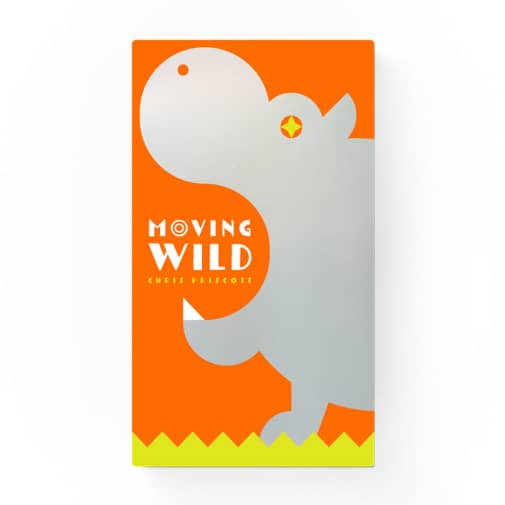
Moving Wild Game

SKU
042835
Grade 3-AD
Teaching Method
Traditional
Teacher-centered curriculum commonly used in classrooms that may include a text, teacher manual, tests, etc.
Charlotte Mason
A methodology based on the work of a 19th century educator who maintained that children learn best from literature (Living Books), not textbooks.
Classical
A methodology based on the Latin Trivium (three stages of learning), including the grammar stage (memorization and facts), logic stage (critical thinking), and rhetoric stage (developing/defending ideas).
Unit Study
A thematic or topical approach centered around one topic that integrates multiple subject areas.
Montessori (Discovery)
A methodology based on the work of a 20th century educator that emphasizes student and sensory-driven discovery learning and real-life applications.
Other
Other methodologies
Religious Content
Secular
Contains content contrary to common Christian beliefs (i.e. evolution).
Neutral
Avoids religious or theoretical topics or presents multiple viewpoints without preference.
Christian/Religious
Faith-based or including instructional religious content.
Learning Modality
Auditory
Learns through listening, talking out loud or reading out loud.
Visual
Learns through seeing, prefers written instructions and visual materials.
Kinesthetic/Tactile (Hands-On)
Learns through moving, doing and touching.
Multi-Sensory
Curriculum that employ a variety of activities/components.
Presentation
Sequential
Curriculum progresses through well-defined learning objectives. Emphasizes mastery before moving to the next topic.
Spiral
Topics and concepts are repeated from level to level, adding more depth at each pass and connecting with review.
Conceptual/Topical
Focus is on the “why,” often with a unifying concept as well as specific skills; coverage may be broader.
Teacher Involvement
Low Teacher Involvement
Student-led materials; parent acts as a facilitator.
Medium Teacher Involvement
A mix of teacher-led time and independent student work.
High Teacher Involvement
Teacher-led lessons; may utilize discussions, hands-on activities and working together.
Additional Materials Required
No other materials needed
Everything you need is included.
Other Materials Required
There are additional required resources that are a separate purchase.
Other Materials Optional
There are additional resources mentioned or recommended but are not absolutely necessary.
Consumable
Consumable
Designed to be written in; not reusable.
Non-Consumable
Not designed to be written in; reusable.
Our Price
$23.00 $23.00 $21.95
Rainbow Savings: $1.05

Product Overview

  • Pocket-sized card game for 1-6 players
  • Collect environment and animal cards to create your own nature preserve
  • Earn points for filled environments and animals in their correct habitats
  • Plays in 20 minutes

Description

Develop your own national park in the Moving Wild game from Oink games. This is a 20-minute pocket-sized card game to take on the go with family and friends. There are three types of cards—environment, improvement, and animals—which are shuffled together.  Players start with a basecamp environment card and receive a specified number of cards from the deck based on player count. 

On a turn, each player chooses a card from their deck and passes the rest of the cards to another player. Then, everyone adds the chosen card to his or her park. The three types of cards are:

Environment: There are three types of habitats (water, lands, and forest) and environment cards can have one, two, or three different habitats on their cards. Environment cards also indicate how many animal spaces they can accommodate, and a multiplier to apply to each animal card’s point value in this environment. 

Improvement: These are companion cards added to one environment, which provides it with a benefit such as a habitat, scoring benefit, or increased space for animals. 

Animal: Each card shows how many spaces they take up in an environment, which habitat they need to live in, how many points they are worth when located within an environment, and whether they are happy or angry. The rule is that happy and angry animals do not coexist in the same environment.

As players take turns selecting cards, passing their deck, and placing cards, the goal is to fill each environment and find a home for every animal. If an animal does not have a place to live, it is kept to the side. Once everyone’s deck has run out, the round ends and scoring starts. 

All animals in environments score per their individual scoring, making sure any multipliers greater than 1 shown on the environment card they are in are used. If a player has unplaced animals, subtract 2 points each. Subtract 2 points for any environment card that is not fully populated. Players take scoring tokens to represent their points and if this is the end of round one or two, they set up for another round. After three rounds, the person with the highest total score wins! For 1-6 players with a 20-minute game time. ~ Marsha

Publisher's Description of Moving Wild Game
Developing a national park is no small feat. Some animals have begun their migration, going around and around in search of a new place to live. Hippos that love both water and land. Huge elephants. And bears that just want to be left alone. "Uhhhh," you can't help but growl as the cards go around. You want to secure the perfect spot, but should you choose a location or an animal first? Take one card at a time and pass the rest around in this "drafting" style game. Match just the right animals with just the right locations and create the most harmonious national park ever!
Details
More Information
Product Format:Other
Grades:3-AD
Brand:Oink
EAN/UPC:4571394093559
Length in Inches:4.3125
Width in Inches:2.5625
Height in Inches:1.5
Weight in Pounds:0.4
Videos
Reviews
Product Q&A