
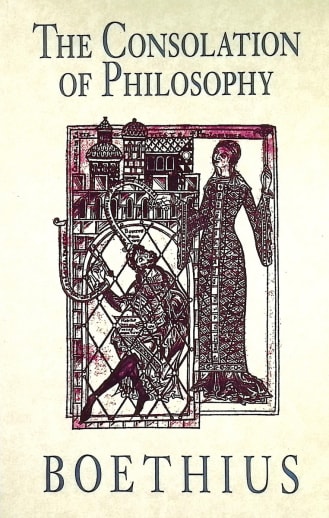
This rich book, written by Roman scholar, theologian, and philosopher Anicius Manlius Severinus Boethius, is a detailed exploration of philosophy in relation to human happiness, suffering, and God. Written in alternating prose between Boethius himself and the character “Philosophy,” arguments and feelings are examined. At the start of the book, Boethius writes about being in a state of misery, and slowly, Philosophy shares she means to open his eyes to what is beyond. The text is divided into books and further into smaller sections based on individual topics being discussed. Includes introduction, notes, an index, and a selected bibliography. 120 pages, paperback.
Consolation of Philosophy
SKU
012081
ISBN
9780486421636
Grade 9-AD
These icons are designed to help you quickly understand and learn important information about our products.
Teaching Method
Traditional
Teacher-centered curriculum commonly used in classrooms that may include a text, teacher manual, tests, etc.
Charlotte Mason
A methodology based on the work of a 19th century educator who maintained that children learn best from literature (Living Books), not textbooks.
Classical
A methodology based on the Latin Trivium (three stages of learning), including the grammar stage (memorization and facts), logic stage (critical thinking), and rhetoric stage (developing/defending ideas).
Unit Study
A thematic or topical approach centered around one topic that integrates multiple subject areas.
Montessori (Discovery)
A methodology based on the work of a 20th century educator that emphasizes student and sensory-driven discovery learning and real-life applications.
Other
Other methodologies
Religious Content
Secular
Contains content contrary to common Christian beliefs (i.e. evolution).
Neutral
Avoids religious or theoretical topics or presents multiple viewpoints without preference.
Christian/Religious
Faith-based or including instructional religious content.
Learning Modality
Auditory
Learns through listening, talking out loud or reading out loud.
Visual
Learns through seeing, prefers written instructions and visual materials.
Kinesthetic/Tactile (Hands-On)
Learns through moving, doing and touching.
Multi-Sensory
Curriculum that employ a variety of activities/components.
Presentation
Sequential
Curriculum progresses through well-defined learning objectives. Emphasizes mastery before moving to the next topic.
Spiral
Topics and concepts are repeated from level to level, adding more depth at each pass and connecting with review.
Conceptual/Topical
Focus is on the “why,” often with a unifying concept as well as specific skills; coverage may be broader.
Teacher Involvement
Low Teacher Involvement
Student-led materials; parent acts as a facilitator.
Medium Teacher Involvement
A mix of teacher-led time and independent student work.
High Teacher Involvement
Teacher-led lessons; may utilize discussions, hands-on activities and working together.
Additional Materials Required
No other materials needed
Everything you need is included.
Other Materials Required
There are additional required resources that are a separate purchase.
Other Materials Optional
There are additional resources mentioned or recommended but are not absolutely necessary.
Consumable
Consumable
Designed to be written in; not reusable.
Non-Consumable
Not designed to be written in; reusable.
Our Price
$8.95 $8.95 $7.25
Rainbow Savings: $1.70
Product Overview
- Author explores philosophy as it relates to happiness, suffering, and ultimately God
- Written in alternating dialogue between the author and “Philosophy”
- Divided into books and then into further sections
- Includes an introduction, notes, selected bibliography, and an index
Description
Publisher's Description of Consolation of Philosophy
One of the most influential books in the history of Western thought, The Consolation of Philosophy
was written in a prison cell by a condemned man. Anicius Manlius Severinus Boethius (c. 480–524) was a Roman scholar, theologian, philosopher, and statesman. Imprisoned by the Ostrogothic king Theodoric, probably on trumped-up subversion charges, he was thrown into a remote prison where he was eventually executed.
While awaiting his fate, he wrote this dialogue in alternating prose and poetry between himself and his spiritual guardian. Its subject is human happiness and the possibility of achieving it in the midst of the suffering and disappointment that characterize human existence. As Richard H. Green notes in the introduction, "For the reader of the Christian Middle Ages, The Consolation of Philosophy
celebrated the life of the mind, or reason, and the possibility of its ultimate victory over the misfortunes and frustrations which attend fallen man's pursuit of transitory substitutes for the Supreme Good which alone can satisfy human desires."
Mr. Green's translation is quite literal in order to remain as faithful as possible to Boethius's original meaning. He has also provided an informative introduction and notes. The result is a superbly accessible edition that still exercises a powerful influence on contemporary thinkers and theologians and represents a source of comfort and solace for the general reader.
was written in a prison cell by a condemned man. Anicius Manlius Severinus Boethius (c. 480–524) was a Roman scholar, theologian, philosopher, and statesman. Imprisoned by the Ostrogothic king Theodoric, probably on trumped-up subversion charges, he was thrown into a remote prison where he was eventually executed.
While awaiting his fate, he wrote this dialogue in alternating prose and poetry between himself and his spiritual guardian. Its subject is human happiness and the possibility of achieving it in the midst of the suffering and disappointment that characterize human existence. As Richard H. Green notes in the introduction, "For the reader of the Christian Middle Ages, The Consolation of Philosophy
celebrated the life of the mind, or reason, and the possibility of its ultimate victory over the misfortunes and frustrations which attend fallen man's pursuit of transitory substitutes for the Supreme Good which alone can satisfy human desires."
Mr. Green's translation is quite literal in order to remain as faithful as possible to Boethius's original meaning. He has also provided an informative introduction and notes. The result is a superbly accessible edition that still exercises a powerful influence on contemporary thinkers and theologians and represents a source of comfort and solace for the general reader.
Details
| Product Format: | Paperback Book |
|---|---|
| Grades: | 9-AD |
| Brand: | Dover Publications |
| Author: | Boethius |
| ISBN: | 9780486421636 |
| Length in Inches: | 8.5 |
| Width in Inches: | 5.5 |
| Height in Inches: | 0.25 |
| Weight in Pounds: | 0.4 |
Videos
Reviews