These icons are designed to help you quickly understand and learn important information about our products.
Teaching Method
Traditional
Teacher-centered curriculum commonly used in classrooms that may include a text, teacher manual, tests, etc.
Charlotte Mason
A methodology based on the work of a 19th century educator who maintained that children learn best from literature (Living Books), not textbooks.
Classical
A methodology based on the Latin Trivium (three stages of learning), including the grammar stage (memorization and facts), logic stage (critical thinking), and rhetoric stage (developing/defending ideas).
Unit Study
A thematic or topical approach centered around one topic that integrates multiple subject areas.
Montessori (Discovery)
A methodology based on the work of a 20th century educator that emphasizes student and sensory-driven discovery learning and real-life applications.
Other
Other methodologies
Religious Content
Secular
Contains content contrary to common Christian beliefs (i.e. evolution).
Neutral
Avoids religious or theoretical topics or presents multiple viewpoints without preference.
Christian/Religious
Faith-based or including instructional religious content.
Learning Modality
Auditory
Learns through listening, talking out loud or reading out loud.
Visual
Learns through seeing, prefers written instructions and visual materials.
Kinesthetic/Tactile (Hands-On)
Learns through moving, doing and touching.
Multi-Sensory
Curriculum that employ a variety of activities/components.
Presentation
Sequential
Curriculum progresses through well-defined learning objectives. Emphasizes mastery before moving to the next topic.
Spiral
Topics and concepts are repeated from level to level, adding more depth at each pass and connecting with review.
Conceptual/Topical
Focus is on the “why,” often with a unifying concept as well as specific skills; coverage may be broader.
Teacher Involvement
Low Teacher Involvement
Student-led materials; parent acts as a facilitator.
Medium Teacher Involvement
A mix of teacher-led time and independent student work.
High Teacher Involvement
Teacher-led lessons; may utilize discussions, hands-on activities and working together.
Additional Materials Required
No other materials needed
Everything you need is included.
Other Materials Required
There are additional required resources that are a separate purchase.
Other Materials Optional
There are additional resources mentioned or recommended but are not absolutely necessary.
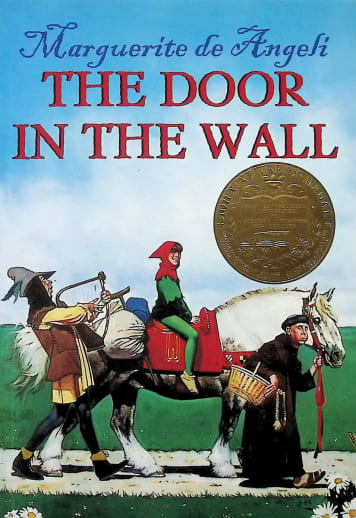
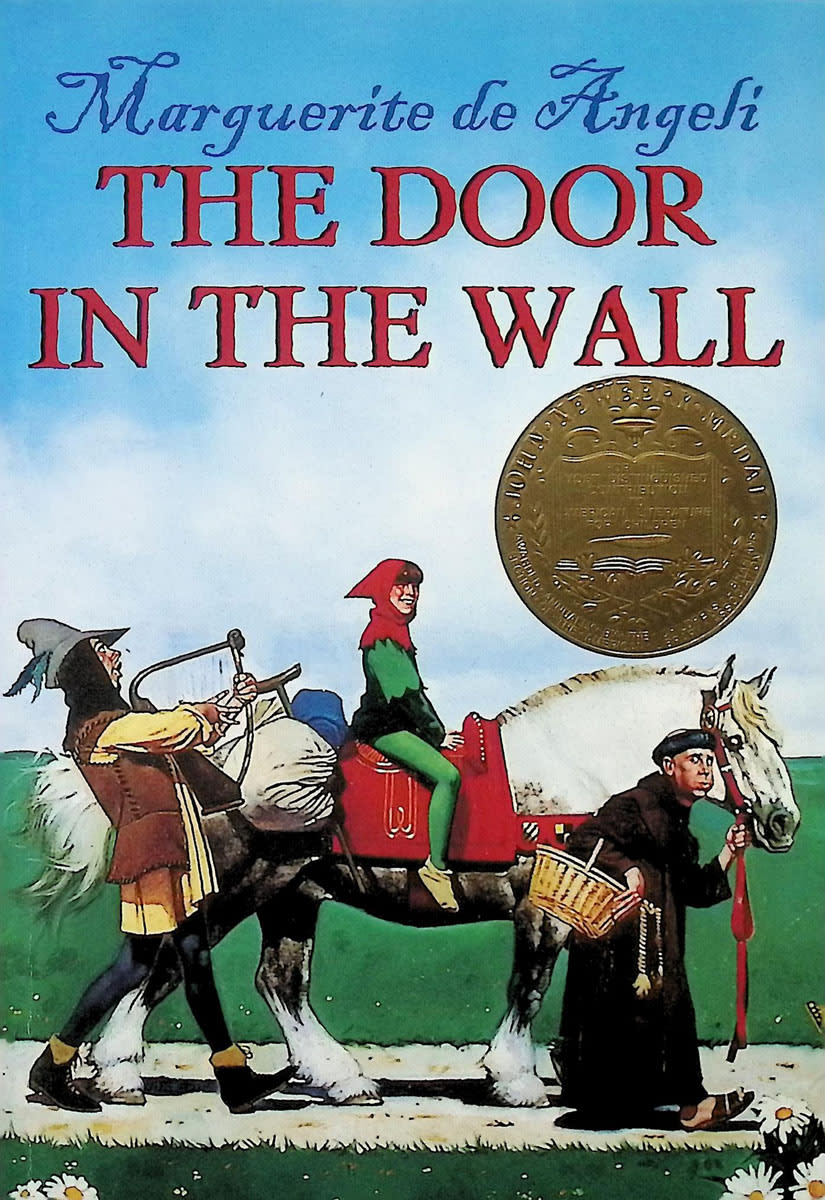
1950 Newbery Medal winner. Set in medieval England, a young boy named Robin desires to learn the ways of knighthood, but falls ill and loses the use of his legs. A kindly monk shows him how even someone who cannot walk is needed.
Publisher's Description of The Door in the Wall by Marguerite de Angeli
Ever since he can remember, Robin, child of Sir John de Bureford, has been told what is expected of him as the son of a nobleman. He must learn the ways of knighthood. But Robin’s destiny is changed suddenly when he falls ill and loses the use of his legs. Fearing a plague, his servants abandon him, and Robin is left alone. A monk named Brother Luke rescues Robin and takes him to the hospice of St. Mark’s, where he is taught woodcarving and patience and strength. Says Brother Luke, “Thou hast only to follow the wall far enough and there will be a door in it.” Robin learns soon enough what Brother Luke means. When the great castle of Lindsay is in danger, Robin discovers that there is more than one way to serve his king.
Ready Readers are literature study guides designed to
complement the Socratic methodology taught in Teaching the Classics by
Adam & Missy Andrews.
These ready-to-use guides provide fleshed-out lesson plans
and Socratic discussion questions for whole-book studies, making it easier for
parents to lead meaningful literary analysis with their children.
Key Curriculum Features:
Discussion-based
studies focusing on setting, characters, conflict, plot, theme, literary
devices, and context
Carefully
crafted Socratic questions with talking-point answers for the teacher
Story
charts and one-page book summaries included for each title
Flexible
use with students of varying ages (often slightly below the student’s
reading level to build confidence)
Can be
used with any unabridged edition of the selected book
Excellent
bridge between Teaching the Classics methodology and actual book
studies
Program Components:
Each
Ready Reader volume contains complete studies for multiple books at a
specific reading level
Includes
Socratic discussion questions, teacher talking points, story charts, and
summaries
Designed
to work alongside Teaching the Classics seminar for best results
Ready Readers stand out for their practical,
ready-to-go format that helps parents confidently lead rich literature
discussions. They are an excellent choice for families who want structured
guidance in teaching literary analysis while using quality literature.