
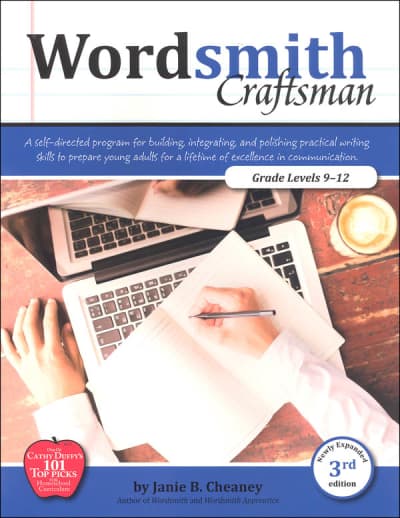

If the Wordsmith Apprentice is the junior version of Wordsmith, then the Wordsmith Craftsman is the senior. Written for the young adult, it concentrates on making sure older students have the necessary communication and writing skills for their adult lives, no matter what occupation they enter. In three parts it covers the various aspects of writing they will need "out in the real world." In Part One, "Writing Every Day," taking notes, writing letters, constructing summaries and composing business reports are covered. Part Two, "Language Power" includes paragraphs, writing techniques, and developing a personal writing style. This all builds up to the grand finale, "The Essay," which covers topics, structure, and the step-by-step writing. Different types of essays are practiced: expository, narrative, descriptive, and persuasive. Answers are printed in the back of the book for some of exercises. This workbook has been revised and now includes updated information regarding e-mail communication and Internet research, additional examples, a brief discussion of research papers, and an added section on critical writing (reviews and critical essays). Very complete and informative, this is ideal for rounding out a high school writing program. - Jess
Wordsmith Craftsman (3rd Edition)
Description
The Wordsmith Writing Series by Janie B. Cheaney is a popular, literature-based homeschool writing program that teaches students to write with clarity, creativity, and confidence. Written directly to the student in a friendly, engaging style, it is especially effective for reluctant writers.
The series progresses logically from elementary through high school, building essential writing skills step by step.
Key Curriculum Features:
- Student-directed lessons with clear instruction and interesting assignments
- Strong emphasis on word choice, sentence variety, description, characterization, and dialogue
- Progressive skill development from paragraphs to short stories to essays
- Creative, hands-on writing projects that make writing enjoyable
- Focus on the full writing process, including revision and editing
Program Levels:
- Wordsmith Apprentice (Grades 4-6): Fun reporter approach to writing where students participate in every role on a newspaper staff: editor, reporter, writer, etc.
- Wordsmith (Grades 7-9): Focuses on descriptive writing and culminates in writing a short story
- Wordsmith Craftsman (Grades 10-12): Advanced high school writing with emphasis on paragraphs, essays, and communication skills
Program Components:
- Student Books: Non-consumable or lightly consumable texts with ample writing space (revised editions include extra exercises and examples)
- Teacher Guides: Provide teaching philosophy, tips, additional assignments, and answer keys
The Wordsmith series stands out for its straightforward approach that respects the student’s intelligence while gently building real writing ability. It is an excellent choice for homeschool families seeking a manageable yet effective writing curriculum across multiple grade levels.
Browse all Wordsmith student books, teacher guides, and e-book versions below!
| Product Format: | Softcover Book |
|---|---|
| Grades: | 9-12 |
| Brand: | Common Sense Press |
| Author: | Janey B. Chaney |
| ISBN: | 9781929683536 |
| Length in Inches: | 11 |
| Width in Inches: | 8.5 |
| Height in Inches: | 0.25 |
| Weight in Pounds: | 0.75 |