
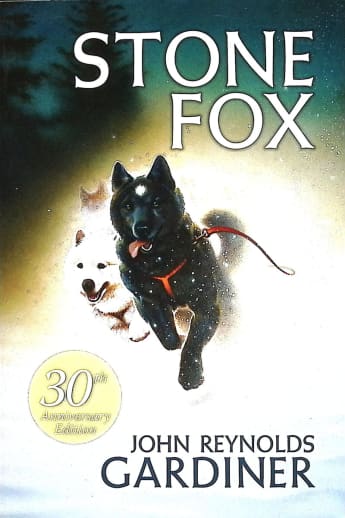
Ten year old Willy lives on a potato farm with his grandfather in Wyoming. They enjoy each other's company and live a fairly routine life. Then one morning, Grandfather fails to wake Willy up like usual. Willy finds Grandfather very sick, but according to the doctor, Grandfather is as healthy as can be. Apparently, he has simply lost the will to live. Willy can not figure out why until one day they have a surprise visitor. Willy learns that the property taxes on the farm have not been paid for over ten years, and they are in danger of losing the farm. Although the townspeople encourage Willy to sell the farm, he instead decides to enter the National Dogsled Race in hopes of paying the taxes with the prize money. His main competitor is Stone Fox, a man who has never lost a race in his life. It is literally a fight to the death as Willy races to save Grandfather's farm. ~ Enh
Stone Fox (30th Anniversary Edition)
Description
John Reynolds Gardiner's classic action-packed adventure story about a thrilling dogsled race has captivated readers for more than thirty years.
Based on a Rocky Mountain legend, Stone Fox tells the story of Little Willy, who lives with his grandfather in Wyoming. When Grandfather falls ill, he is no longer able to work the farm, which is in danger of foreclosure. Little Willy is determined to win the National Dogsled Race—the prize money would save the farm and his grandfather. But he isn't the only one who desperately wants to win. Willy and his brave dog Searchlight must face off against experienced racers, including a Native American man named Stone Fox, who has never lost a race.
The Upper Elementary guides provide age-appropriate reading and activities for students from a Christian perspective. This level of literature guides has moved exclusively to chapter books and will be fortifying literary analysis and reading comprehension skills. Titles include lots of nostalgic books from our childhood. There are great hands-on activities, dedicated vocabulary building sections, digging deeper comprehension questions, and connections to Scripture and application throughout every guide. Pages can be copied for family and individual classroom use. Your target goal is 4-6 guides in your school year. Answers are in the back and can be easily removed. Each guide includes Notes to the Instructor, mini author biographies, and background information. You may be working with a range of students all from one guide, and that’s okay! Each student will do what they are developmentally capable of accomplishing. User-friendly and a useful tool to guide reading for a purpose! ~Rebecca
| Product Format: | Softcover Book |
|---|---|
| Grades: | 3-4 |
| Brand: | HarperCollins |
| Author: | John Reynold Gardiner |
| ISBN: | 9780064401326 |
| Length in Inches: | 5.125 |
| Width in Inches: | 7.625 |
| Height in Inches: | 0.375 |
| Weight in Pounds: | 0.2 |
| Ages: | 7 - 11 |
| Edition: | 25th Anniversary Edition; Special; Illustrated |
| Illustrated by: | Marcia Sewall and Greg Hargreaves |
| Pages: | 96 |