
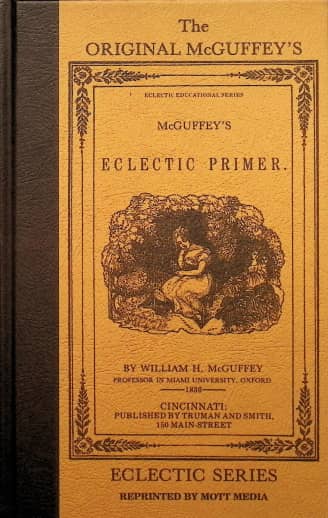
Introduce timeless reading foundations with the McGuffey Eclectic Primer from Mott Media (William Holmes McGuffey), perfect for kindergarten to grade 1 homeschoolers. This classic hardcover reader features short, moral-driven stories with strong character lessons, brief comprehension questions, spelling words, articulation guidance, and wholesome illustrations to engage young learners. Many selections draw from classic literature and the Bible, reinforcing Christian values through sequential phonics progression and mastery emphasis. Medium teacher involvement (with more guidance needed for early readers) aligns with Charlotte Mason principles of learning from "Living Books" rather than dry textbooks—excellent for homeschool families wanting faith-based, traditional phonics instruction that builds fluent reading, moral understanding, and visual engagement. Optional companions like the Parent-Teacher Guide by Ruth Beechick or Progressive Speller enhance lesson planning and word study.
McGuffey Eclectic Primer
Description
The McGuffey Eclectic Readers: 1836 Edition are faithful, hardcover reprints of William H. McGuffey’s original 1836 readers. These classic texts combine high-quality literature, strong moral lessons, and Christian values that were foundational to early American education.
Known for their rigorous content and character-building stories, the 1836 Edition offers timeless selections from the Bible and classic authors, helping students develop excellent reading, vocabulary, articulation, and moral reasoning skills.
Key Curriculum Features:
- Authentic 1836 edition with original moral and Christian worldview
- Strong emphasis on character training, virtue, and biblical principles
- Progressive difficulty from beginning reading through advanced literature
- Excellent for developing clear pronunciation, elocution, and reading fluency
- Rich vocabulary and classic literary selections
- Includes brief comprehension questions and spelling words
Program Components:
- Hardcover Readers covering Primer through Fourth Reader
- Progressive Speller containing challenging word lists with syllable division and accent marks
- Parent-Teacher Guide written by Ruth Beechick with helpful teaching notes, lesson ideas, grade-level suggestions, and glossaries
The 1836 Edition of McGuffey Eclectic Readers stands out for its historical authenticity, strong moral foundation, and timeless literary quality. It is an excellent choice for families who want a rigorous, character-building reading program rooted in classical Christian education.
Browse all McGuffey Eclectic Readers 1836 Edition volumes, sets, and the Ruth Beechick Parent-Teacher Guide below!
| Product Format: | Hardcover Book |
|---|---|
| Grades: | K-1 |
| Brand: | Mott Media |
| Author: | William Holmes McGuffey |
| ISBN: | 9780880620185 |
| Length in Inches: | 8.75 |
| Width in Inches: | 6 |
| Height in Inches: | 0.25 |
| Weight in Pounds: | 0.4 |