
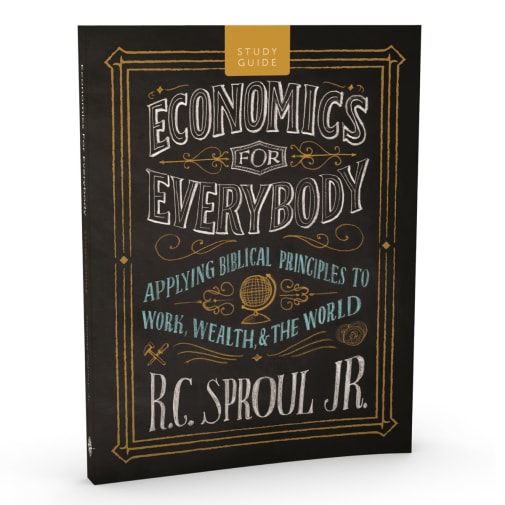
Economics for Everybody Study Book

SKU
030117
ISBN
9781567693133
Grade 7-AD
Teaching Method
Traditional
Teacher-centered curriculum commonly used in classrooms that may include a text, teacher manual, tests, etc.
Charlotte Mason
A methodology based on the work of a 19th century educator who maintained that children learn best from literature (Living Books), not textbooks.
Classical
A methodology based on the Latin Trivium (three stages of learning), including the grammar stage (memorization and facts), logic stage (critical thinking), and rhetoric stage (developing/defending ideas).
Unit Study
A thematic or topical approach centered around one topic that integrates multiple subject areas.
Montessori (Discovery)
A methodology based on the work of a 20th century educator that emphasizes student and sensory-driven discovery learning and real-life applications.
Other
Other methodologies
Religious Content
Secular
Contains content contrary to common Christian beliefs (i.e. evolution).
Neutral
Avoids religious or theoretical topics or presents multiple viewpoints without preference.
Christian/Religious
Faith-based or including instructional religious content.
Learning Modality
Auditory
Learns through listening, talking out loud or reading out loud.
Visual
Learns through seeing, prefers written instructions and visual materials.
Kinesthetic/Tactile (Hands-On)
Learns through moving, doing and touching.
Multi-Sensory
Curriculum that employ a variety of activities/components.
Presentation
Sequential
Curriculum progresses through well-defined learning objectives. Emphasizes mastery before moving to the next topic.
Spiral
Topics and concepts are repeated from level to level, adding more depth at each pass and connecting with review.
Conceptual/Topical
Focus is on the “why,” often with a unifying concept as well as specific skills; coverage may be broader.
Teacher Involvement
Low Teacher Involvement
Student-led materials; parent acts as a facilitator.
Medium Teacher Involvement
A mix of teacher-led time and independent student work.
High Teacher Involvement
Teacher-led lessons; may utilize discussions, hands-on activities and working together.
Additional Materials Required
No other materials needed
Everything you need is included.
Other Materials Required
There are additional required resources that are a separate purchase.
Other Materials Optional
There are additional resources mentioned or recommended but are not absolutely necessary.
Consumable
Consumable
Designed to be written in; not reusable.
Non-Consumable
Not designed to be written in; reusable.
Our Price
$20.00 $20.00 $18.75
Rainbow Savings: $1.25

Product Overview

  • A biblical and philosophical intro to macro economics
  • Combine with digital teaching and PDFs for a full course
  • Great for those who do best reading a tangible book
  • Half or 1 credit options

Description

This consumable study book provides an in-your-hand resource to go alongside the course by the same name. Students will study the interconnectedness between philosophy, economics and Christian theology. The author asserts that economics and the Christian worldview are inescapably interwoven and therefore should be studied together. Chapters provide some discussion and short answer questions, but there’s limited space for writing answers in this book.

While usable for middle schoolers as an intro text (with parent guidance), most will opt for this course as a half credit Economics option at the high school level. Combine this required Student Book with the lifetime digital streaming (includes lectures, PDF study guide, and necessary PDF worksheet). After listening to the lectures, students read the assigned chapters and process the information via discussion and short answer questions (provided via PDF). Short answer quizzes and a recommended additional reading list are also provided. Note: answers are not included. If you’d like a full, 1 credit, upper-level course which delves deeper into more traditional economics concepts, add the suggested text, Basic Economics, 4 ed. A complete scope and sequence for both 1/2 credit and 1 credit courses is provided in the digital materials. 236 pgs, pb. ~ Ruth

Publisher's Description of Economics for Everybody Study Book

The 266p Study Guide includes each lesson in a convenient paragraph format with additional material not included in the videos:

  • Multiple choice, short answer, and discussion questions for each lesson;
  • Scope & Sequence included in the Study Guide for easy curriculum planning;
  • Full answer key included in the book for convenient self-guided study;
  • For Further Reading sections with chapter listings for the 4th Edition of our recommended Basic Economics textbook
Category Description for Economics for Everybody

Economics for Everybody: Applying Biblical Principles to Work, Wealth, and the World asserts that Christian theology, philosophy, and economics are inescapably interwoven and influence each other. The 12 units, complete with 20 minute digital lectures, succinctly provide reading material, scriptural support, lecture outlines, short answer and discussion questions, and additional reading suggestions, which help students pursue topical interests. 

The Study Guide is required, but comes included in the lifetime Digital Streaming for a complete introductory 1/2 credit course. Print versions of the student book are available separately. The course lectures and reading comprise the main course content. After listening to the lectures, students read the student book and process the information via discussion and short answer questions provided via PDF. Answers are not included. For a full-year, upper-level course that delves deeper into more traditional economics concepts, add the suggested Basic Economics, 4th Edition textbook.

Details
More Information
Product Format:Paperback Book
Grades:7-AD
Brand:Compass Classroom
ISBN:9781567693133
Length in Inches:7.5625
Width in Inches:5.25
Height in Inches:0.625
Weight in Pounds:0.6
Videos
This product doesn't have a video
Reviews
Product Q&A