
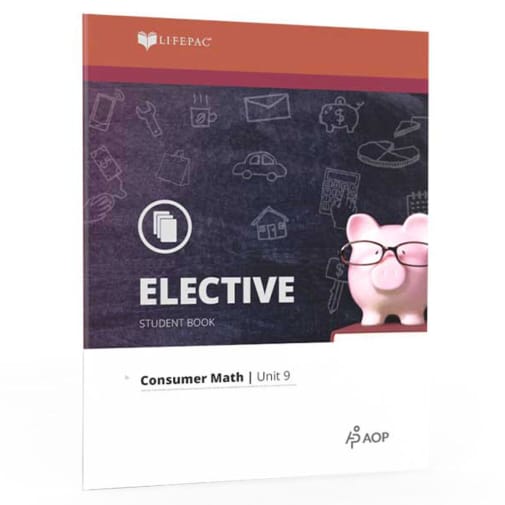
In Consumer Mathematics Unit 9, students will study ways to begin responsible habits now, exploring options becoming more financially literate from a young age. Students learn strategies for completing research on financial topics, including identifying reliable resources and evaluating sources for reliability and credibility. Lastly, students will explore considerations for retirement and learn about tools for calculating retirement savings.
In this course, students will study:
· Responsible financial habits
· Consequences of financial irresponsibility
· How to find reliable financial information
· Strategies to evaluate sources of financial information
· What to consider for retirement savings
· How to calculate retirement income
· Tools for saving for retirement
Course Objectives
· Identify ways to be a financially responsible individual.
· Give examples of the benefits of financial responsibility.
· Give examples of the costs of financial irresponsibility.
· Identify effects of responsibility and irresponsibility on the local and global community.
· Understand there are a variety of sources for financial information.
· Understand why financial resources should be evaluated for validity.
· Know the characteristics of reliable financial resources.
· Know the characteristics of unreliable financial resources.
· Learn tools for evaluating sources of financial information.
· Practice evaluating financial information for reliability and relevance.
· Understand common retirement savings plan options.
· Recognize the different rules and requirements of common retirement savings plans.
· Explore retirement considerations.
· Become familiar with retirement savings calculators.