- Bargain Items are brand-new products that have been dinged, dented, or scuffed, but are otherwise in usable condition.
- Bargain Items have limited inventory, and they are only reserved for you when checkout is completed.
- Bargain Items are non-returnable and non-refundable.
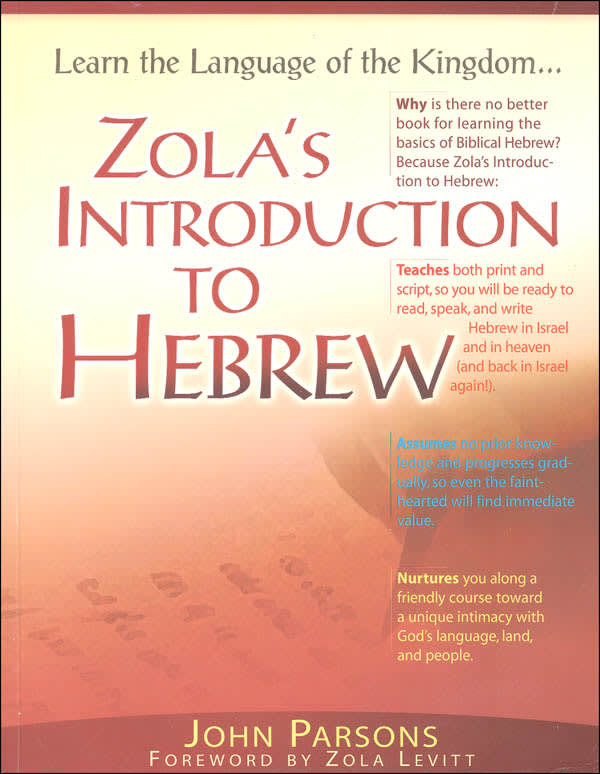
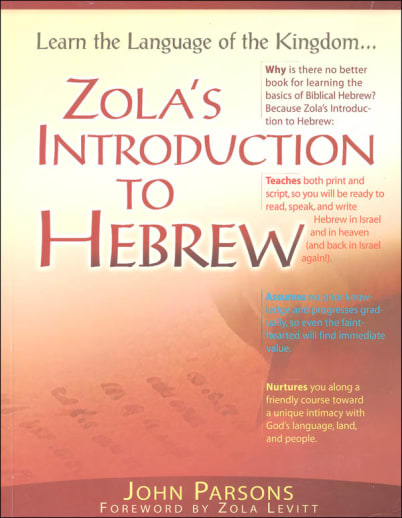
More than half of the Bible is written in Hebrew. For Bible study purposes alone, this fact warrants learning the language. This text, originally intended for an adult audience at Bible colleges and seminaries, emphasizes the correct pronunciation and reading of Hebrew words and phrases. Hebrew is complex and this text does not formally introduce grammatical concepts, nor does it follow a direct, traditional language learning method. The primary goal is to equip learners to read and comprehend written text rather than communicating in Hebrew.
The first 6 chapters introduce each consonant letter of the alphabet. Since vowels are not delineated in the Hebrew alphabet, the additional 6 chapters teach the vowels as classes. As you’re learning to write the letters, you may want to provide your students with additional graph paper for writing practices, such as this 1 centimeter option.
Then, by lesson 13 (starting as Jewish children do) students will learn to read the 3 parts of the Shema in Hebrew and then work through the Ten Commandments, The Sabbath and other blessings, as well as daily worship prayers and blessings.
The author, John Parsons, recommends following this pattern when studying the lessons: pray, review daily (30 minutes per day); use graph paper to practice the letter forms and make flash cards.
Each of the 12 lessons in Part I should take one week per lesson for your motivated high school student. Lessons in Part II may be studied and reviewed for months to come. The readings in Lessons 12 through 16 provide the Hebrew writing with a transliteration and then an English translation below. Background information and cultural explanation elaborate on each text.
Lesson 17 explains the Tanakh (the full Torah, Prophets, and
The Writings) and the Brit Chadashah (New Testament), followed by Scripture
samples in Hebrew with the corresponding Scripture in English KJV. While no
transliteration or direct translation is included at this point, the student
should be able to pronounce these. A good Strong's Concordance would solve the
word for word translation. Lesson 18 discusses the Hebrew names of God with
transliteration and definitions, with an in-depth discussion on 18 specific
names.
The wealth of language, as well as Biblical and cultural information here is astounding. Even if you do not wish to read full documents in Hebrew, this text would be an excellent source for Bible study or in preparation for a trip to Israel. Additional resources include an in-depth Hebrew Glossary and a bibliography. 6th edition Copyright 2017. 412 pgs, pb.~ Ruth