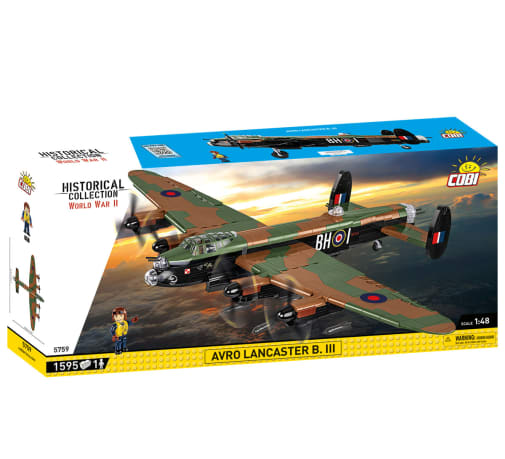
The Avro Lancaster B Mk.I/III was a key element of the British
bombing strategy during World War II. Its ability to carry large bomb
loads, durability and versatility made it one of the most effective and
versatile bombers used by the Allies. The new model has the markings of
the Polish 300th Bomber Squadron "Ziemia Mazowiecka". Additionally, the
model has movable propellers, retractable landing gear, opening bomb bay
with block bombs, a block with the name of the set, a miniature
reproduced interior and a figure of a Polish pilot from the 300th Bomber
Squadron.
The Lancaster's design began with the Avro
Manchester design, which was suffering from engine reliability
problems. With the addition of two additional engines and other
modifications, the Lancaster was born. The first Lancaster prototype
(BT308) flew on 9 January 1941. The aircraft quickly proved superior to
the Manchester and production of the Lancaster began the same year. The
Mk.I was the first production version, powered by Rolls-Royce Merlin XX
engines. The Mk.III differed from the Mk.I mainly in its Packard Merlin
engines, which were produced under licence in the USA. The Lancaster
entered operational service in February 1942 with No. 44 Squadron RAF.
It quickly became the RAF's main bomber. Used primarily for night
bombing, the Lancaster was key to many important bombing operations,
including the bombing of Hamburg (Operation Gomorrah) and Dresden.
Lancasters were used for various special missions, such as Operation
Chastise (raids on dams), as well as for dropping heavy bombs, like the
Grand Slam and Tallboy, which were capable of destroying heavily
fortified targets.
300th Bomber Squadron "Ziemia
Mazowiecka" was an important part of the Polish contribution to the
Allied war effort during World War II. Its members fought with great
sacrifice, and their courage and skill contributed to the RAF's
successes in the bombing campaign against the Third Reich. The squadron
remains a symbol of the Polish contribution to the fight for freedom and
independence during one of the most difficult periods in history.