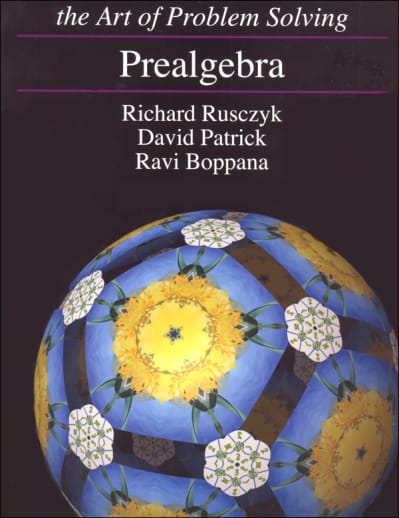
This is an outstanding math program for the math-gifted student. It is rigorous and oriented to the independent problem-solver. The texts are based on the premise that students learn math best by solving problems - lots of problems - and preferably difficult problems that they don't already know how to solve. Most sections, therefore, begin by presenting problems and letting students intuit solutions BEFORE explaining ways to solve them. Even if they find ways to answer the problems, they should read the rest of the section to see if their answer is correct and if theirs is the best or most efficient way to solve that type of problem. Textual instruction, then, is given in the context of these problems, explaining how to best approach and solve them.
Throughout the text there are also special, blue-shaded boxes highlighting key concepts, important things to retain (like formulas), warnings for potential problem-solving pitfalls, side notes, and bogus solutions (these demonstrate misapplications). There are exercises at the end of most sections to see if the student can apply what's been learned. Review problems at the end of each chapter test understanding for that chapter. If a student has trouble with these, he should go back and re-read the chapter. Each chapter ends with a set of Challenge Problems that go beyond the learned material. Successful completion of these sets demonstrates a high degree of mastery.
A unique feature in this series is the hints section at the back of the book. These are intended to give a little help to selected problems, usually the very difficult ones (marked with stars). In this way, students can get a little push in the right direction, but still have to figure out the solution for themselves. The solution manuals do contain complete solutions and explanations to all the exercises, review problems and challenge problems. It is best for students not to access these until they have made several attempts to solve the problems first. I particularly like one of the motivating boxes in the text that coaches, "If at first you don't know how to solve a problem, don't just stare at it. Experiment!". That pretty much sums up the philosophy of the course, encouraging children to take chances, become aggressive problem solvers, and attack problems with confidence. I wonder how far some children would go if they were encouraged this way instead of being spoon fed?
Though this course is used in classroom settings, the texts are student-directed, making them perfect for the independent learner or homeschooler. Students should start the introductory sequence with the Prealgebra book. Afterwards, begin the Introduction to Algebra. Students will be prepared for both the Introduction to Counting and Probability and Introduction to Number Theory courses after completing the first 11 chapters of Algebra. It won't matter whether they do these along with Algebra, put aside Algebra and complete the other two or finish Algebra first and then do them. All of them should be completed prior to the Introduction to Geometry book. If you are coming into this course from another curriculum, you will probably want to take a placement test to decide where to enter this program. Even if your student has finished Algebra 2 elsewhere, you will want to make sure that all of the material from this series has been covered before continuing on to the Intermediate series.
Taken together, these constitute a complete curriculum for outstanding math students in grades 6-10 and one that prepares them for competitions such as MATHCOUNTS and the American Mathematics Competitions. The material is challenging and in-depth; this is not a course for the mathematically faint of heart. If your child loves math, is genuinely math-gifted, or is interested in participating in math competitions, you definitely need to give this one serious consideration.